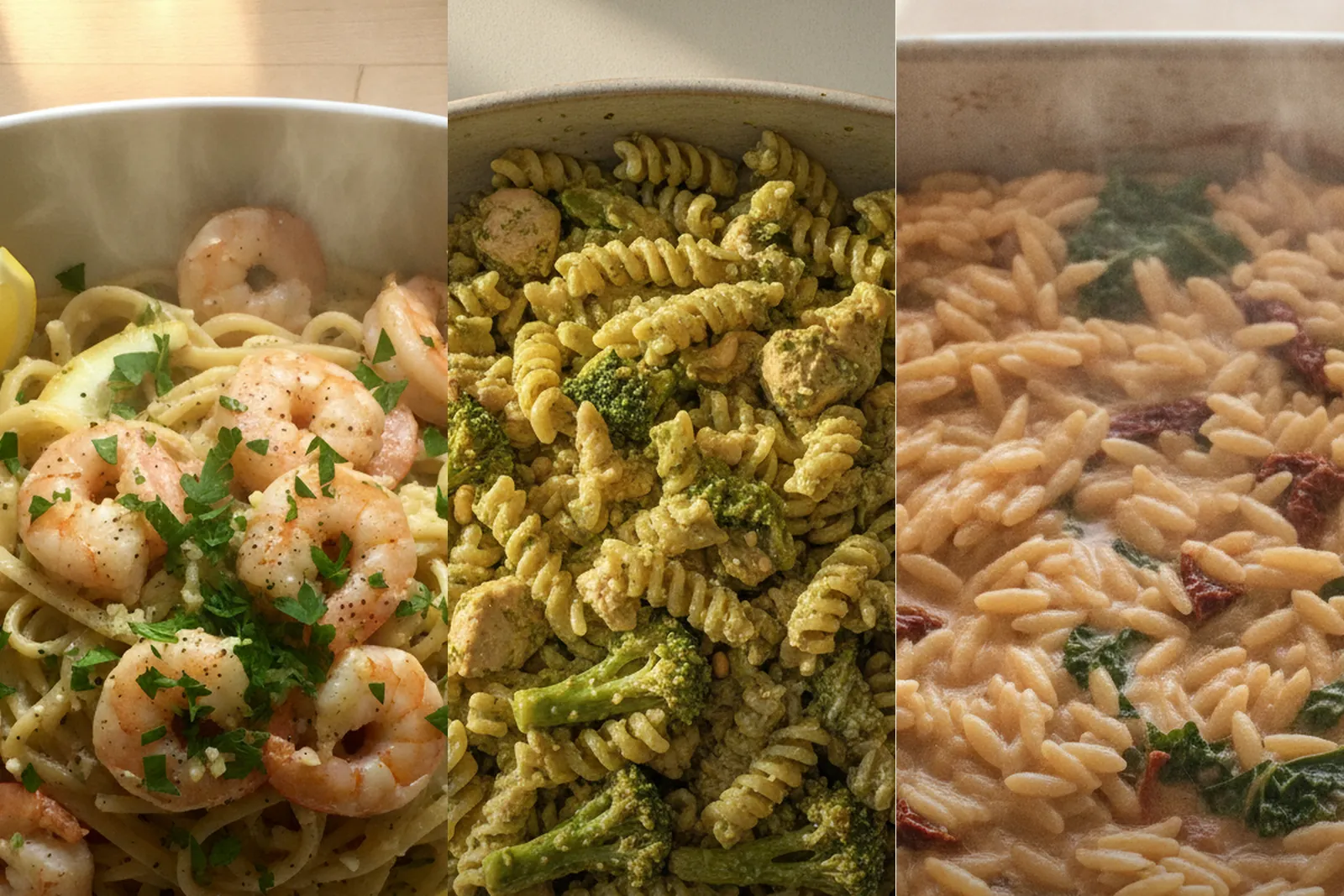
Quick answer: healthy pasta recipes keep the creamy sauce but swap heavy cream for light cream cheese, Greek yogurt or the pasta's own starch, use a 2 oz (56 g) portion of pasta and add a real protein and vegetables. Our five come in at 366 to 540 calories a bowl: lemony garlic shrimp pasta (33 g protein), creamy tomato and spinach penne, a Greek yogurt mushroom Alfredo (366 kcal), chicken and broccoli pesto rotini (40 g protein) and a one-pot sun-dried tomato orzo. Each recipe below has full macros and a free recipe card.
These healthy pasta recipes come from our "creamy pasta under 500 calories" recipe collection, and every one of them is a proper, creamy bowl of pasta, not a plate of zucchini pretending to be noodles. We calculated calories, protein, carbs and fat for each bowl from the ingredients, using USDA data, and we found that one of the five, the chicken pesto, actually lands at 540 calories with the card's amounts. We kept the recipe as written and show you the two swaps that bring it under 500.
Most "healthy pasta" lists stop at the recipes. Below we also show exactly how much each creamy base costs you in calories compared with heavy cream, why the portion of pasta matters more than the shape, and which recipe gives you the most protein for the calories. If you cook for two or four, every recipe scales by simply multiplying, and there is a combined shopping list for all five.
Pick tonight's pasta
Tap a bowl to jump to its recipe, nutrition and free recipe card.
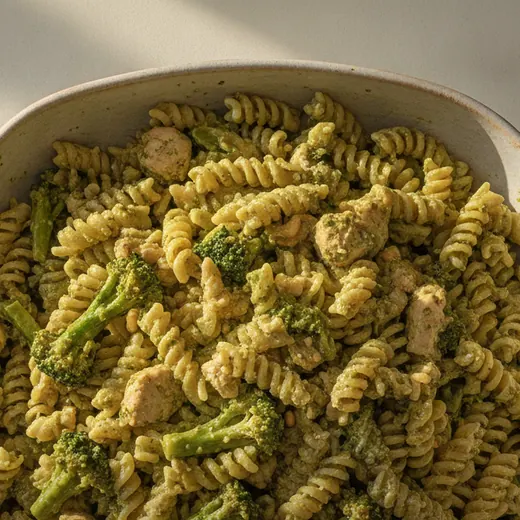
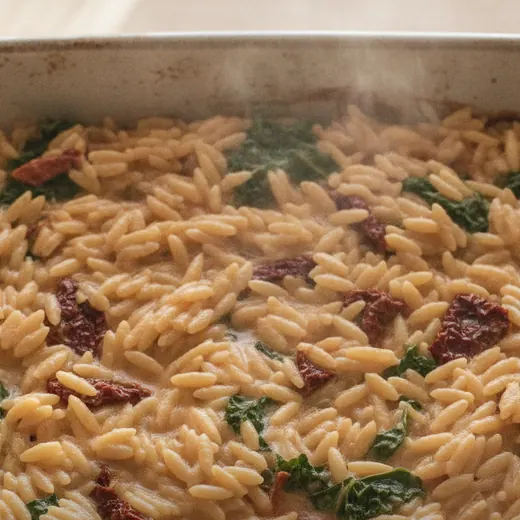
All 5 healthy pasta recipes at a glance
Calories and protein are per bowl, calculated from each recipe's ingredients with the same food database as our recipe calorie calculator, corrected with USDA FoodData Central values for light cream cheese, whole wheat pasta, asparagus and sun-dried tomatoes.
| Recipe | Time | Calories | Protein | What makes it creamy |
|---|---|---|---|---|
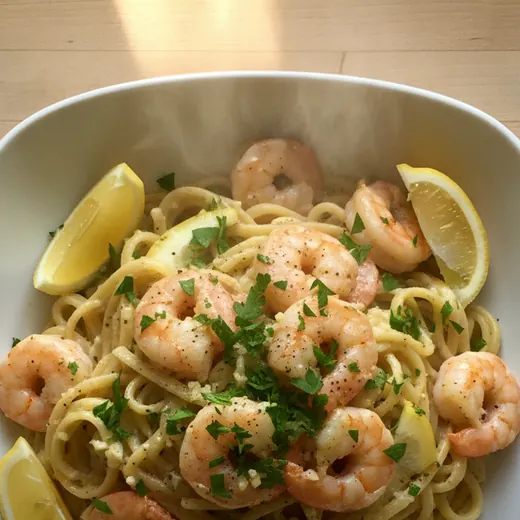
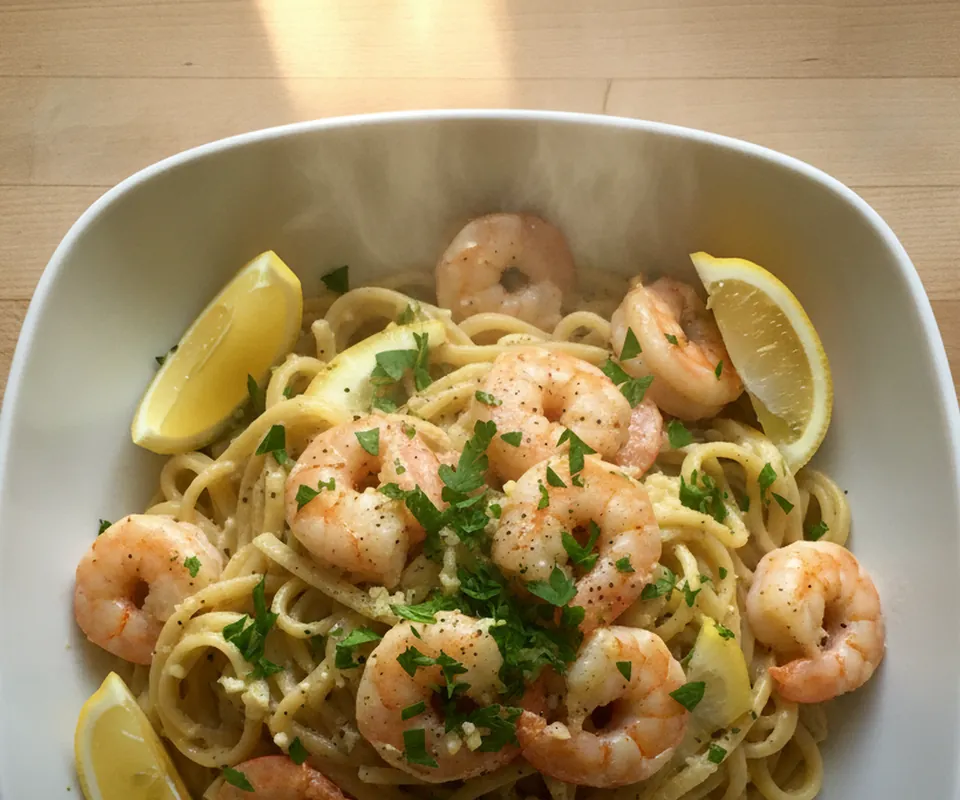
| Lemony Garlic Shrimp Pasta | 20 min | 408 | 33 g | Light cream cheese + broth |
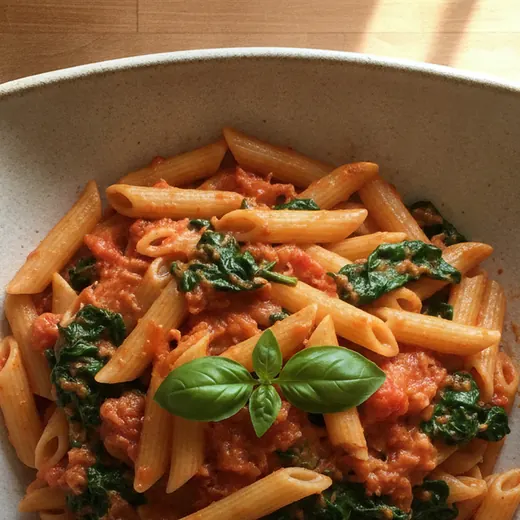
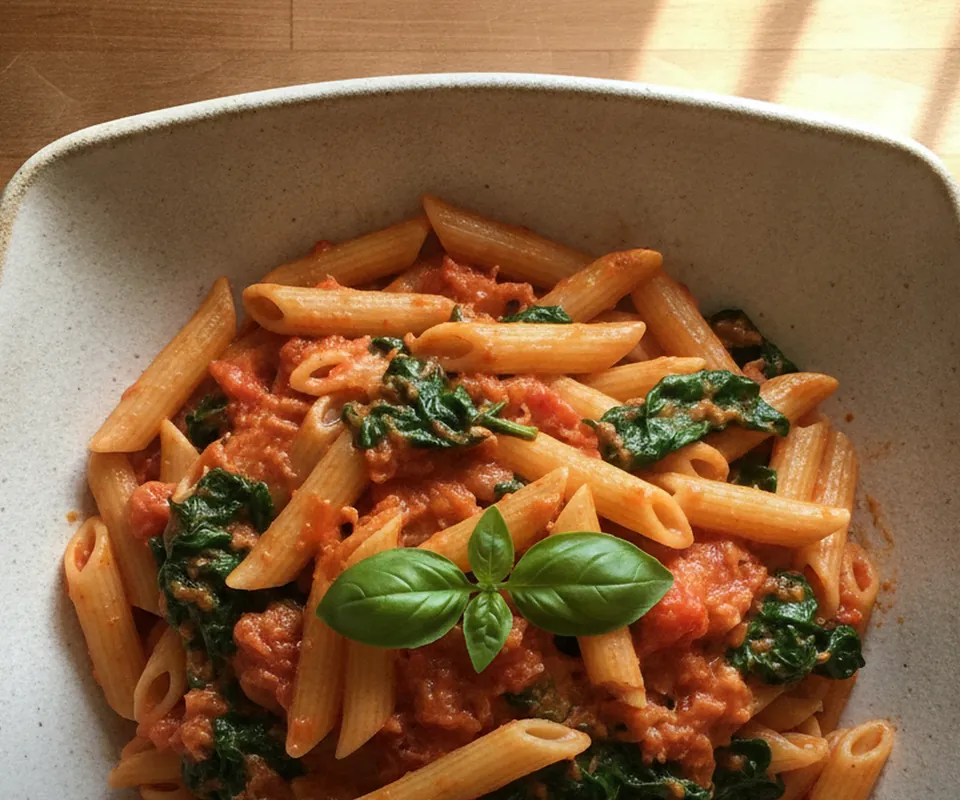
| Creamy Tomato and Spinach Pasta | 20 min | 419 | 18 g | Light cream cheese + tomatoes |
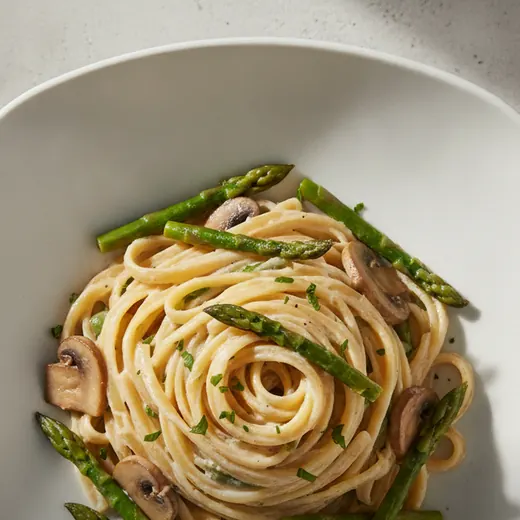
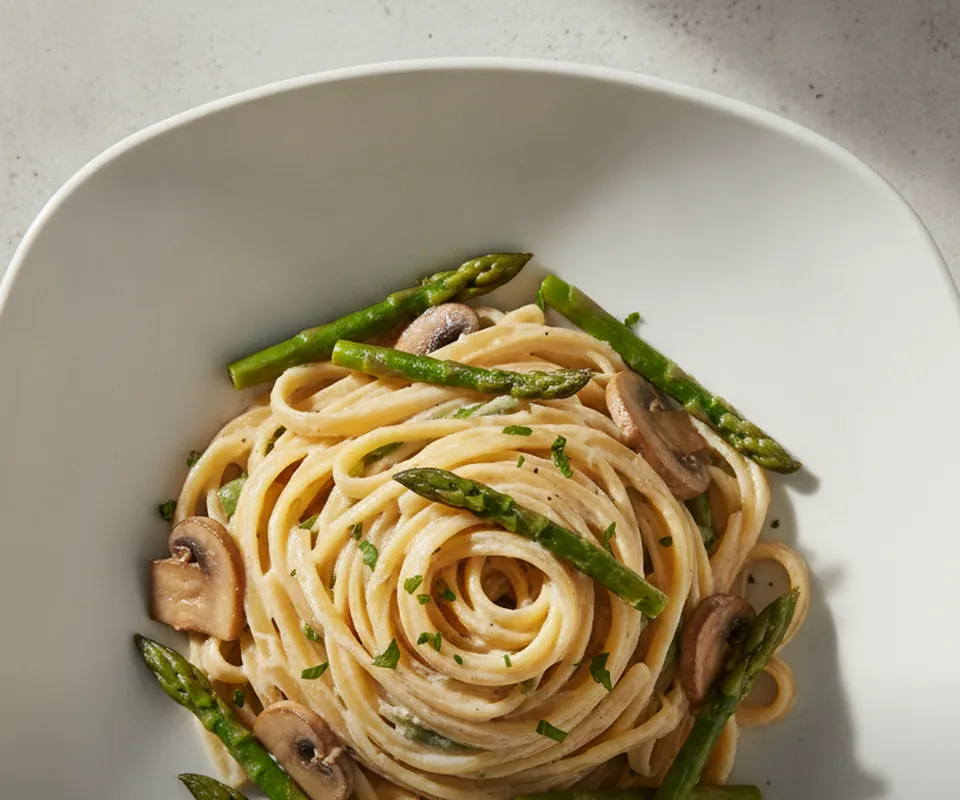
| Light Mushroom and Asparagus Fettuccine Alfredo | 20 min | 366 | 22 g | Greek yogurt + skim milk |
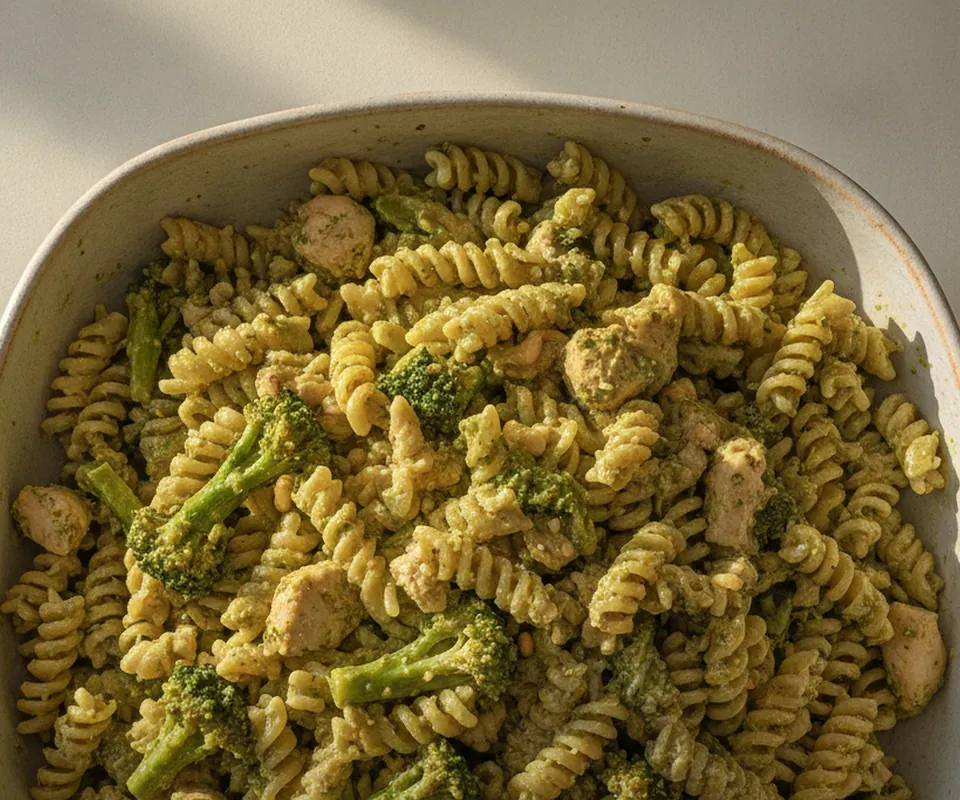
| Creamy Chicken and Broccoli Pesto Pasta | 25 min | 540 | 40 g | Light cream cheese + pesto |
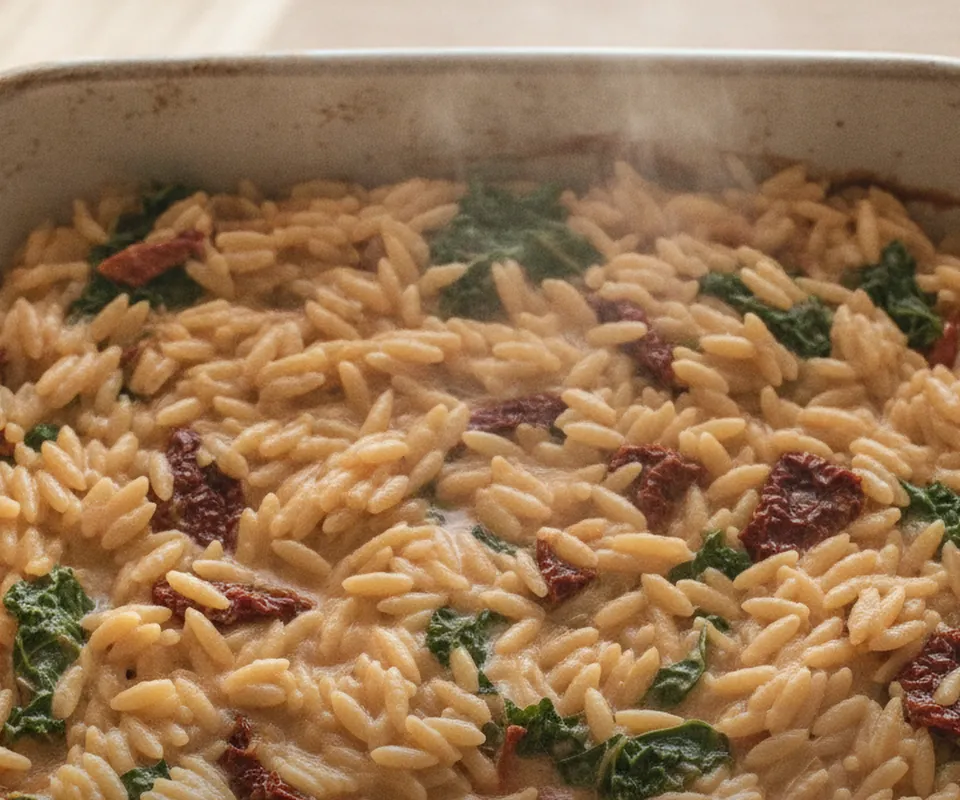
| Creamy Sun-Dried Tomato and Kale Orzo | 25 min | 443 | 18 g | Light cream cheese + starchy broth |
How to make pasta creamy without heavy cream (the sauce math)
The single biggest calorie difference between a restaurant cream pasta and these bowls is the sauce base. Olive Garden's own US nutrition guide lists its Fettuccine Alfredo dinner portion at 1,220 calories and 89 g of fat, most of it from butter, cream and cheese. Here is what each creamy base used in this collection adds to one bowl, next to the heavy cream it replaces:
| Creamy base (one bowl) | Calories | Fat | Protein | Used in |
|---|---|---|---|---|
| 2 tbsp (30 g) heavy cream | 102 | 10.8 g | 0.8 g | None (for comparison) |
| 2 tbsp (30 g) light cream cheese | 60 | 4.6 g | 2.4 g | Shrimp, tomato, pesto, orzo |
| 1/4 cup nonfat Greek yogurt + 1/4 cup skim milk | 56 | 0.3 g | 8.3 g | Light Alfredo |
| 1 tbsp store-bought pesto | about 63 | 6.5 g | 0.8 g | Chicken pesto |
Out of cream for a recipe that needs it? Our heavy cream substitute guide shows the best swap for pasta sauce, soup, baking and whipping, with calories per cup for each.
Values per USDA FoodData Central (heavy cream, "cream cheese, low fat", nonfat Greek yogurt, skim milk) and our nutrition database for pesto. Pesto brands vary a lot, so check the label on yours.
What the sauce math shows
- Light cream cheese is the workhorse. At 60 calories for 2 tbsp it is about the same as 1 tbsp of heavy cream, but it melts into hot broth or tomatoes and clings to pasta like a much richer sauce. It is used in four of the five recipes for that reason.
- Greek yogurt is the only base that adds protein. The yogurt and skim milk Alfredo gives you over 8 g of protein from the sauce alone, which is why the lightest bowl here still has 22 g of protein.
- Starch is free creaminess. Saving 1/4 cup of pasta water, or cooking orzo in its broth, puts starch into the sauce. A tablespoon or two thickens and smooths a light sauce at almost no calorie cost.
- The sauce is not the only lever. Even with a light sauce, a bowl made with 4 oz of pasta instead of 2 oz adds about 200 calories. Portion size matters as much as the cream.
Why 2 ounces of pasta is the number to remember
Every recipe here uses 2 oz (56 g) of dry pasta per person. That is the serving listed on most pasta nutrition labels and it cooks to about 1 cup. Restaurant and at-home portions are often two or three times that. Weigh the dry pasta once on a kitchen scale and you will see what a portion looks like in your pot; after that, eyeballing gets much more accurate. A 16 oz box makes eight servings at this size.
Protein per calorie and whole wheat vs regular pasta
If you are eating pasta while trying to lose weight or build muscle, protein per 100 calories is a useful way to compare bowls. Three of the five use whole wheat pasta. Per 100 g dry, whole wheat pasta has 9.2 g of fiber against 3.2 g for regular enriched pasta, according to USDA data, with slightly fewer calories (352 vs 371). That is about 5 g of fiber in one 2 oz portion instead of under 2 g. USDA MyPlate advises making at least half your grains whole grains.
| Recipe | Calories | Protein | Protein per 100 kcal | Pasta |
|---|---|---|---|---|
| Lemony Garlic Shrimp Pasta | 408 | 33 g | 8.1 g | Whole wheat |
| Creamy Chicken and Broccoli Pesto Pasta | 540 | 40 g | 7.4 g | Whole wheat |
| Light Mushroom and Asparagus Fettuccine Alfredo | 366 | 22 g | 6.0 g | Regular |
| Creamy Tomato and Spinach Pasta | 419 | 18 g | 4.3 g | Whole wheat |
| Creamy Sun-Dried Tomato and Kale Orzo | 443 | 18 g | 4.1 g | Regular |
- Seafood and chicken lead. The shrimp pasta gives about 8.1 g of protein per 100 calories and the chicken pesto about 7.4 g. Both cross the 30 g mark many people aim for at dinner.
- The vegetarian bowls need help. The tomato penne and the orzo sit at 18 g. Add a can of rinsed white beans or chickpeas across two servings, or 3 oz of cooked chicken or shrimp, to get them over 25 g. Our protein calculator shows how much protein you need per meal.
- Whole wheat swaps work in all five. You can use whole wheat fettuccine in the Alfredo or whole wheat orzo in the orzo recipe for more fiber; the sauces are strong enough to carry the nuttier flavor.
Keep these pasta nights with their macros
Save these recipes in RecipeVault to see calories and protein per serving, scale any of them from one bowl to four and get one grocery list for the week. Free on iPhone and Android.
Lemony Garlic Shrimp Pasta
Ingredients
Instructions
- 1
Cook the spaghetti according to the package until al dente. Save 1/4 cup of the pasta water, then drain.
- 2
While the pasta cooks, heat the olive oil in a large nonstick skillet over medium heat.
- 3
Add the garlic and cook 30 to 60 seconds, just until fragrant. Do not let it brown.
- 4
Add the shrimp and cook 2 to 3 minutes per side, until pink and opaque. Move them to a plate.
- 5
Pour the broth into the skillet, scrape up the browned bits and bring it to a simmer.
- 6
Whisk in the cream cheese until it melts into a smooth, light sauce.
- 7
Stir in the lemon juice, pepper flakes, salt and pepper.
- 8
Add the spaghetti and toss to coat. If the sauce is thick, loosen it with 1 to 2 tbsp of the pasta water.
- 9
Return the shrimp, toss for 30 seconds to warm through and serve topped with parsley.
Why it works: 2 tbsp of light cream cheese whisked into hot broth makes a glossy, lemony sauce for 60 calories, about the same as 1 tbsp of heavy cream. Add the lemon juice off the boil so it stays bright. This is the best protein for the calories in the set: 33 g for 408 kcal.
Creamy Tomato and Spinach Pasta
Ingredients
Instructions
- 1
Cook the penne according to the package until al dente. Save 1/4 cup of the pasta water, then drain.
- 2
Heat the olive oil in a large nonstick skillet over medium heat.
- 3
Add the onion and cook 3 to 4 minutes until soft and translucent.
- 4
Add the garlic and oregano and cook 1 minute more.
- 5
Stir in the tomatoes and broth and bring to a simmer.
- 6
Turn the heat to low and whisk in the cream cheese until the sauce is smooth and pink.
- 7
Add the spinach and stir 1 to 2 minutes until it wilts.
- 8
Season with salt and pepper, add the penne and toss. Loosen with pasta water if needed.
- 9
Serve with a sprinkle of Parmesan.
Why it works: tomato plus a little cream cheese gives you a rosé sauce, the vodka-sauce look without cream or vodka. It is the most filling bowl here for the calories because half a can of tomatoes and a cup of spinach add volume. At 18 g of protein it is the one to boost: a can of drained white beans stirred in for two servings adds about 8 g each.
Light Mushroom and Asparagus Fettuccine Alfredo
Ingredients
Instructions
- 1
Cook the fettuccine according to the package until al dente. Save 1/4 cup of the pasta water, then drain.
- 2
Heat the olive oil in a large nonstick skillet over medium-high heat.
- 3
Add the mushrooms and cook 4 to 5 minutes until browned.
- 4
Add the asparagus and garlic and cook 2 to 3 minutes until the asparagus is tender-crisp.
- 5
Turn the heat to low. Pour in the milk, then whisk in the Greek yogurt until smooth.
- 6
Stir in the Parmesan, salt and pepper until the cheese melts. Keep the heat low so the yogurt does not split.
- 7
Add the fettuccine and toss to coat, loosening with pasta water if needed.
- 8
Serve right away, topped with chives.
Why it works: Greek yogurt and skim milk make an Alfredo-style sauce for about 56 calories and 8 g of protein, against roughly 1,220 calories for a restaurant dinner portion of fettuccine Alfredo. The one rule: keep the heat low once the yogurt goes in, or it turns grainy. Brown the mushrooms well first; that is where the savory depth comes from.
Creamy Chicken and Broccoli Pesto Pasta
Ingredients
Instructions
- 1
Cook the rotini according to the package until al dente. Save 1/4 cup of the pasta water, then drain.
- 2
Heat the olive oil in a large nonstick skillet over medium-high heat. Season the chicken with salt and pepper.
- 3
Cook the chicken 5 to 7 minutes, stirring now and then, until browned and cooked through (165°F). Move it to a plate.
- 4
Add the broccoli and 1 tbsp of water to the same skillet, cover and cook 3 to 4 minutes until tender-crisp. Uncover and let the water cook off.
- 5
Turn the heat to low. Add the cream cheese and milk and whisk until smooth.
- 6
Stir in the pesto.
- 7
Return the chicken and add the rotini. Toss until everything is coated, loosening with pasta water if needed.
- 8
Heat through for 1 minute and serve.
Honest note: with the card's amounts this bowl is 540 calories, not under 500, because pesto is mostly oil (1 tbsp is about 63 kcal). It is also the most filling bowl, with 40 g of protein. To bring it to about 470, skip the olive oil (cook the chicken in a nonstick pan with a spray) and use 1/2 tbsp of pesto, then add a squeeze of lemon for brightness.
Creamy Sun-Dried Tomato and Kale Orzo
Ingredients
Instructions
- 1
Heat the olive oil in a deep skillet or small Dutch oven over medium heat.
- 2
Add the shallot and cook 2 to 3 minutes until soft.
- 3
Add the garlic and sun-dried tomatoes and cook 1 minute.
- 4
Stir in the orzo and toast it for 1 minute.
- 5
Pour in the broth, bring to a simmer, then cover and cook on low 8 to 10 minutes, stirring now and then, until the orzo is almost tender and most of the liquid is absorbed.
- 6
Stir in the kale and cook 2 to 3 minutes until it wilts.
- 7
Take the pan off the heat and stir in the cream cheese until the orzo turns creamy.
- 8
Season with salt and pepper. Add a splash of broth or water if it looks dry.
- 9
Rest 1 to 2 minutes so the sauce thickens, then serve with pepper flakes.
Why it works: cooking the orzo in the broth like a risotto keeps all of its starch in the pan, so 2 tbsp of cream cheese is enough to make it creamy. There is no pasta water to save and only one pan to wash. Use no-salt-added or low-sodium broth: 1 1/2 cups of regular broth carries a lot of salt into one bowl.
Cooking for two or four, plus one shopping list
The cards are written for one bowl, which makes them easy to scale: multiply every ingredient by the number of people. The only things that do not scale straight are the oil (1 1/2 tsp is enough for two in the same pan) and the cooking time for shrimp and chicken, which you should cook in a single layer, in batches if needed. Our free recipe scaler does the math for any recipe, fractions included.
| Cooking for | Dry pasta | Light cream cheese | Protein |
|---|---|---|---|
| 1 | 2 oz (56 g) | 2 tbsp (30 g) | 4 oz shrimp or chicken |
| 2 | 4 oz (1/4 of a 16 oz box) | 1/4 cup (60 g) | 8 oz (1/2 lb) |
| 4 | 8 oz (1/2 of a 16 oz box) | 1/2 cup (120 g, about half an 8 oz block) | 1 lb |
Shopping list for all 5 recipes (one bowl each)
- Pasta: whole wheat spaghetti, whole wheat penne, whole wheat rotini, fettuccine and orzo (2 oz of each). Buying one box of whole wheat penne and using it for three recipes works fine.
- Dairy: one 8 oz block of light cream cheese (you need 8 tbsp), a small tub of plain nonfat Greek yogurt, a little skim or low-fat milk, Parmesan.
- Protein: 4 oz raw shrimp, 4 oz chicken breast.
- Produce: a head of garlic, 1 lemon, 1 small onion, 1 shallot, spinach, kale, broccoli, cremini mushrooms, asparagus, parsley, chives.
- Pantry: olive oil, low-sodium chicken broth and vegetable broth (about 2 cups total), a can of no-salt-added diced tomatoes, sun-dried tomatoes, store-bought pesto, oregano, red pepper flakes.
Want the week planned for you around your calorie target? The free meal plan generator builds one, and the RecipeVault app turns saved recipes into an automatic grocery list.
Tips for creamy, healthy pasta that does not taste light
- Always save the pasta water. It is the difference between a light sauce that clings and one that pools at the bottom of the bowl.
- Melt cream cheese into something hot and liquid. Whisk it into simmering broth or tomatoes, not straight onto dry pasta, or it stays in lumps.
- Treat Greek yogurt gently. Add it over low heat, or off the heat, and stir in the cheese after. Boiling yogurt splits.
- Season at the end. Parmesan, broth and pesto are all salty. Taste before you add salt.
- Cook proteins to safe temperatures. USDA guidance is 165°F for chicken and 145°F for shrimp and fish; shrimp are done when they turn pink and opaque.
- Leftovers: cooked pasta dishes keep 3 to 4 days in the fridge. Reheat with a splash of water or milk so the sauce turns creamy again. For anything else in your fridge, see our food storage guide.
More healthy dinner ideas
Saw a creamy pasta on TikTok or Instagram you want to make lighter? Paste the link into our free recipe importer to get the full recipe with nutrition per serving, then check any swap in the recipe calorie calculator. For more dinners in this range, see our high-protein, low-calorie meals under 500 calories, healthy dinner ideas that do not taste like diet food and easy shrimp recipes. If you want the full-fat version for a weekend, our creamy Tuscan chicken post shows the calories next to the lighter swaps.
Frequently asked questions
Is pasta healthy for weight loss?
Pasta can fit a weight-loss diet when the portion is controlled and the sauce is light. A 2 oz (56 g) dry portion with a lean protein and vegetables, like the shrimp pasta here at 408 calories and 33 g of protein, is a filling dinner. The calories in most pasta dishes come from large portions and butter- or cream-heavy sauces.
How do you make pasta creamy without heavy cream?
Whisk 2 tbsp of light cream cheese into hot broth or tomatoes, use plain Greek yogurt with a little milk over low heat, or use the pasta's own starch: save some pasta water, or cook orzo in broth like risotto. Light cream cheese has about 60 calories per 2 tbsp, against about 102 for the same amount of heavy cream.
What is the healthiest pasta to eat?
Whole wheat pasta has about three times the fiber of regular pasta (9.2 g vs 3.2 g per 100 g dry, USDA) and slightly fewer calories. Bean and lentil pastas add more protein. But the portion and the sauce affect a pasta dinner's calories far more than the shape or type of pasta.
How much pasta is one serving?
One serving is 2 oz (56 g) of dry pasta, which is the serving on most pasta labels and cooks to about 1 cup. A 16 oz box makes 8 servings.
How many calories are in a healthy pasta dinner?
The five recipes here range from 366 calories (Greek yogurt mushroom Alfredo) to 540 calories (chicken and broccoli pesto rotini) per bowl, compared with 1,220 calories for a restaurant dinner portion of fettuccine Alfredo at Olive Garden.
Is whole wheat pasta better than regular pasta?
For fiber, yes: a 2 oz portion of whole wheat pasta has about 5 g of fiber against under 2 g for enriched pasta, and USDA MyPlate recommends making at least half your grains whole. Calories and protein are very similar.
How long does creamy pasta last in the fridge?
Cooked pasta dishes keep 3 to 4 days in the fridge. Reheat them with a splash of water or milk and stir so the sauce becomes creamy again.
Make any pasta recipe lighter in one tap
RecipeVault saves recipes from TikTok, Instagram, YouTube or any website, shows nutrition per serving and rewrites any recipe Healthier or higher in protein in one tap. Free on iPhone and Android.