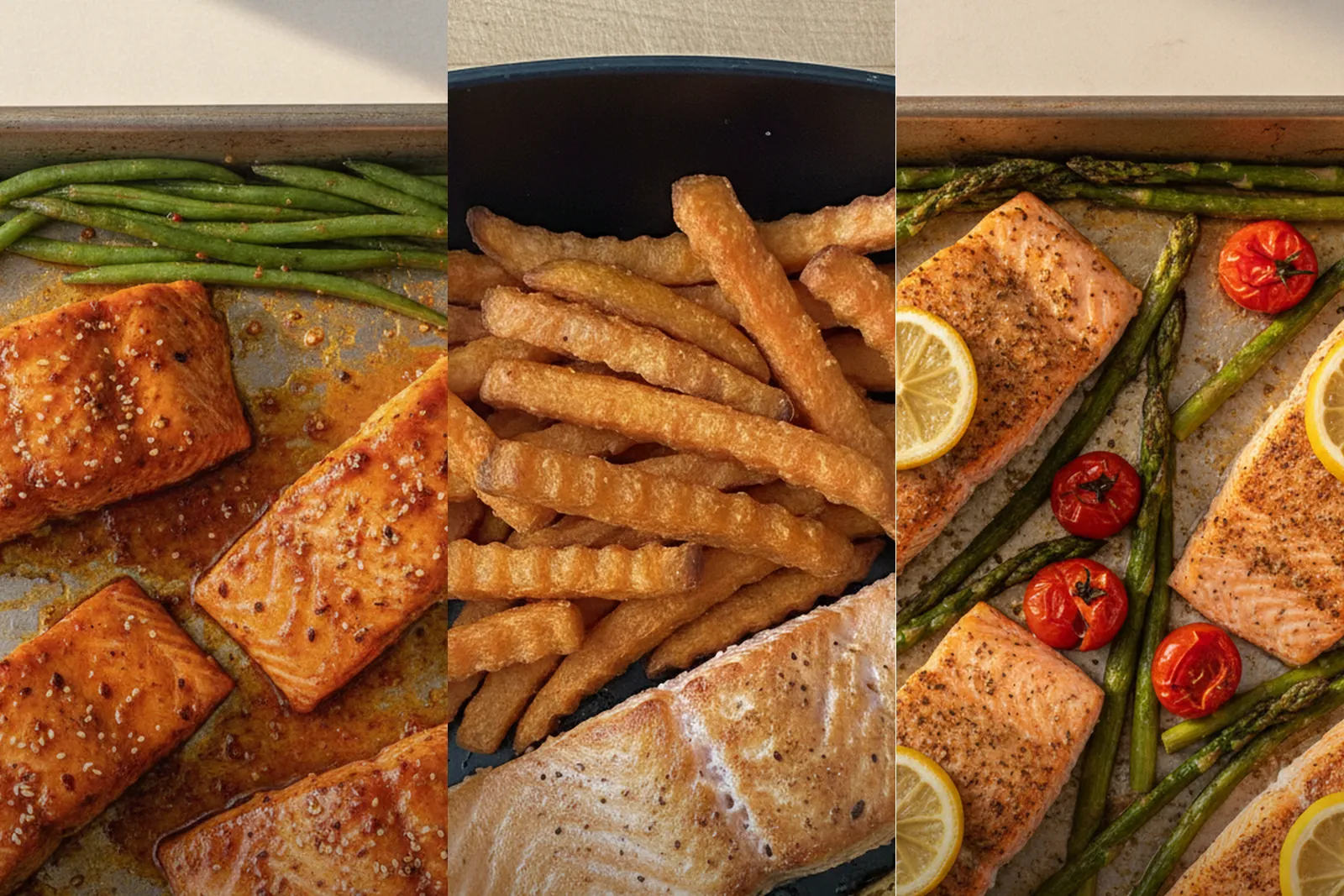
Quick answer: the easiest salmon recipes for weeknights are sheet pan dinners: season or glaze the fillets, put a vegetable on the same pan and roast at 400°F for 12 to 18 minutes, until the salmon reaches 145°F and flakes with a fork. The 7 recipes below include honey sriracha, pesto, sticky ginger garlic, lemon herb foil packets and an air fryer salmon with sweet potato fries. Each one has 34 to 41 g of protein per serving, a photo, full nutrition and a free recipe card.
Salmon is about as close to a perfect weeknight dinner as it gets. It cooks in under 20 minutes, it barely needs a recipe, and a single fillet covers most of a meal's protein. The catch is that most people cook it the same way every time, and it is easy to overcook.
This guide fixes both. We pulled the 7 best salmon dinners from our recipe collections: four sheet pan meals, one foil packet, one air fryer dinner and one five-minute Trader Joe's shortcut. Each comes with nutrition worked out from its own ingredients, a downloadable recipe card, and the one detail that makes it work. Below them you will find how to tell when salmon is done, whether to buy fresh or frozen, farmed or wild, and how to swap the sauces between recipes so you never get bored.
Pick tonight's salmon
Tap a dish to jump to its recipe, nutrition and free recipe card.
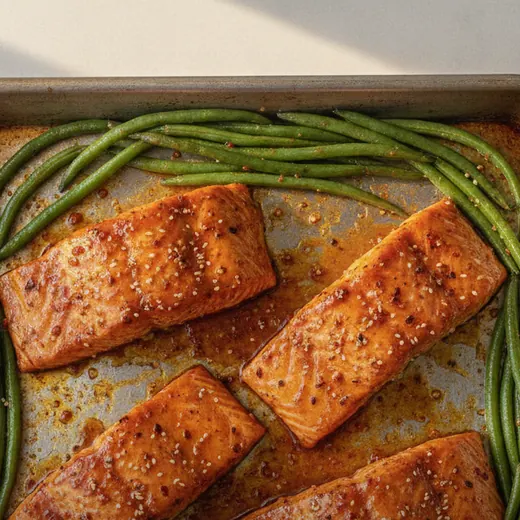 20 minHoney Sriracha Salmon and Green Beans438 kcal · 37 g protein
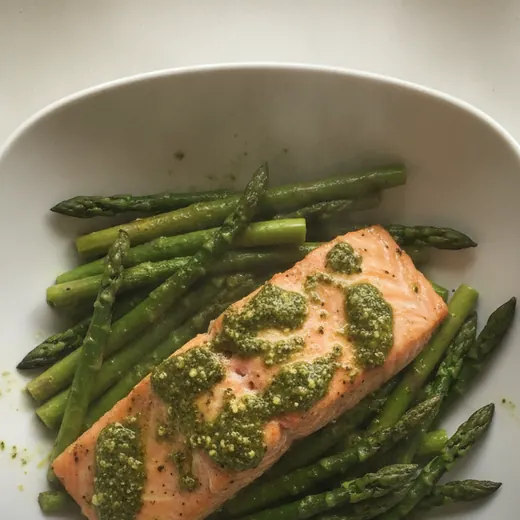 25 minPesto Salmon and Asparagus615 kcal · 41 g protein
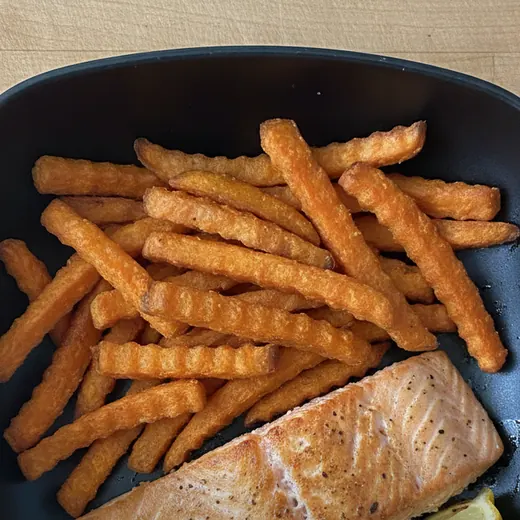 35 minAir Fryer Crispy Salmon and Sweet Potato Fries595 kcal · 38 g protein
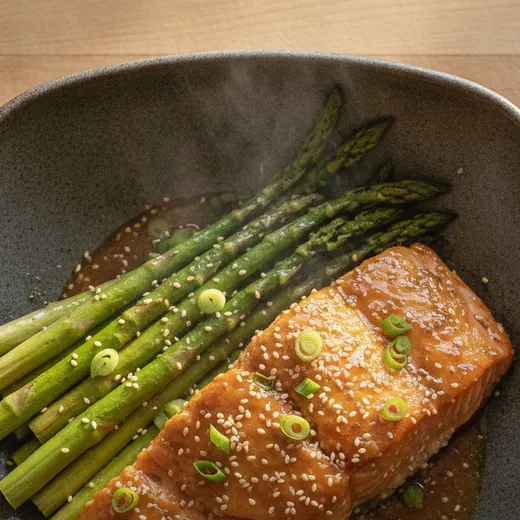 25 minGinger Garlic Salmon with Asparagus417 kcal · 34 g protein
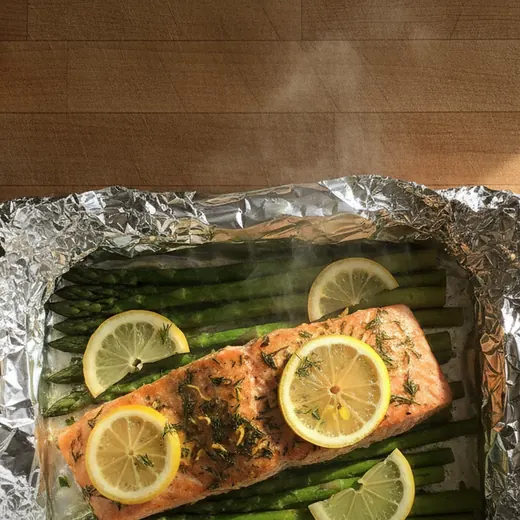 30 minLemon Herb Salmon471 kcal · 40 g protein
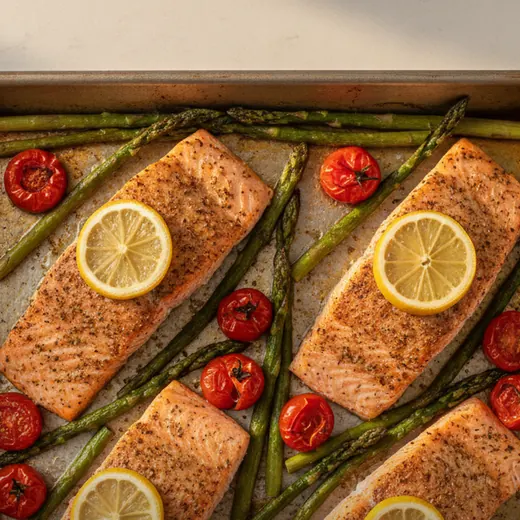 25 minBaked Salmon with Asparagus and Cherry Tomatoes458 kcal · 38 g protein
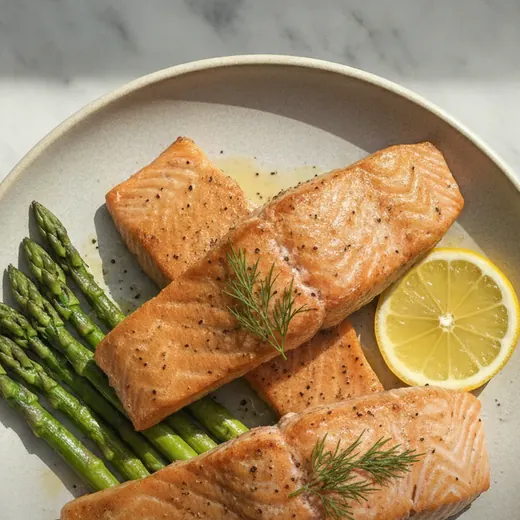 20 minTrader Joe's Umami Salmon and Asparagus459 kcal · 40 g protein
- Is my salmon
done yet?Temperature and buying guide →
All 7 salmon recipes at a glance
Calories and protein are per serving, calculated from each recipe's ingredients with the same database as our recipe calorie calculator. Every recipe uses about 5 to 6 oz of raw salmon per person.
| Recipe | Time | Calories | Protein | Method |
|---|---|---|---|---|
| Honey Sriracha Salmon and Green Beans | 20 min | 438 | 37 g | Sheet pan |
| One-Pan Pesto Salmon and Asparagus | 25 min | 615 | 41 g | Sheet pan |
| Air Fryer Crispy Salmon and Sweet Potato Fries | 35 min | 595 | 38 g | Air fryer |
| Sticky Ginger Garlic Salmon with Asparagus | 25 min | 417 | 34 g | Sheet pan |
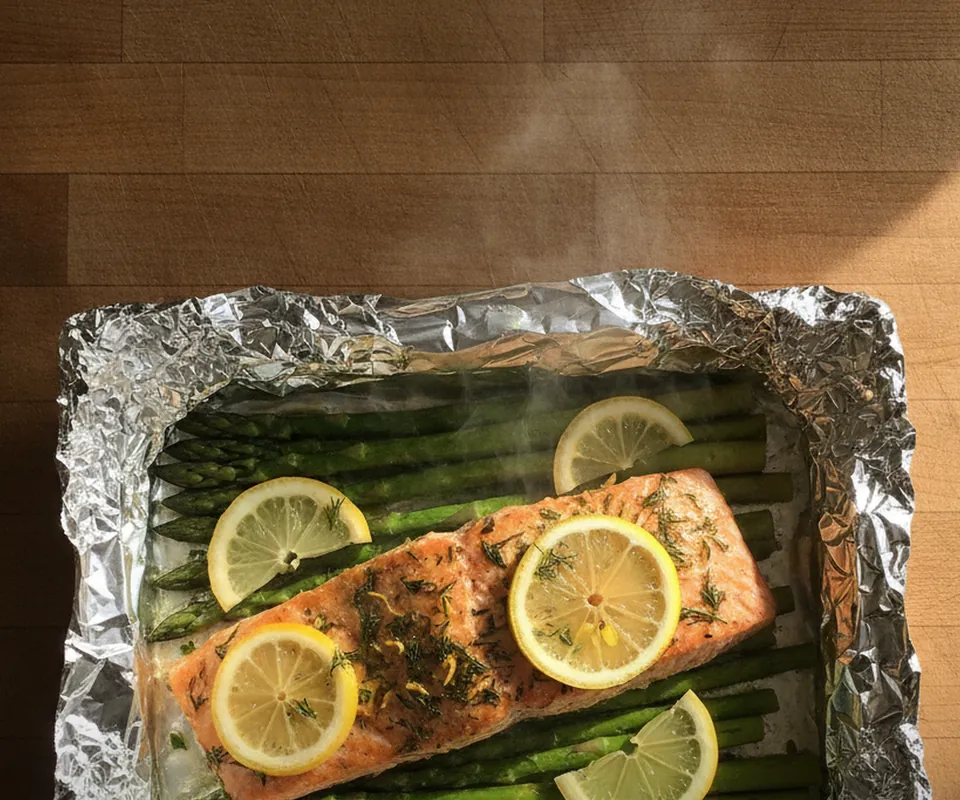
| Lemon Herb Salmon and Asparagus Foil Packets | 30 min | 471 | 40 g | Foil packs |
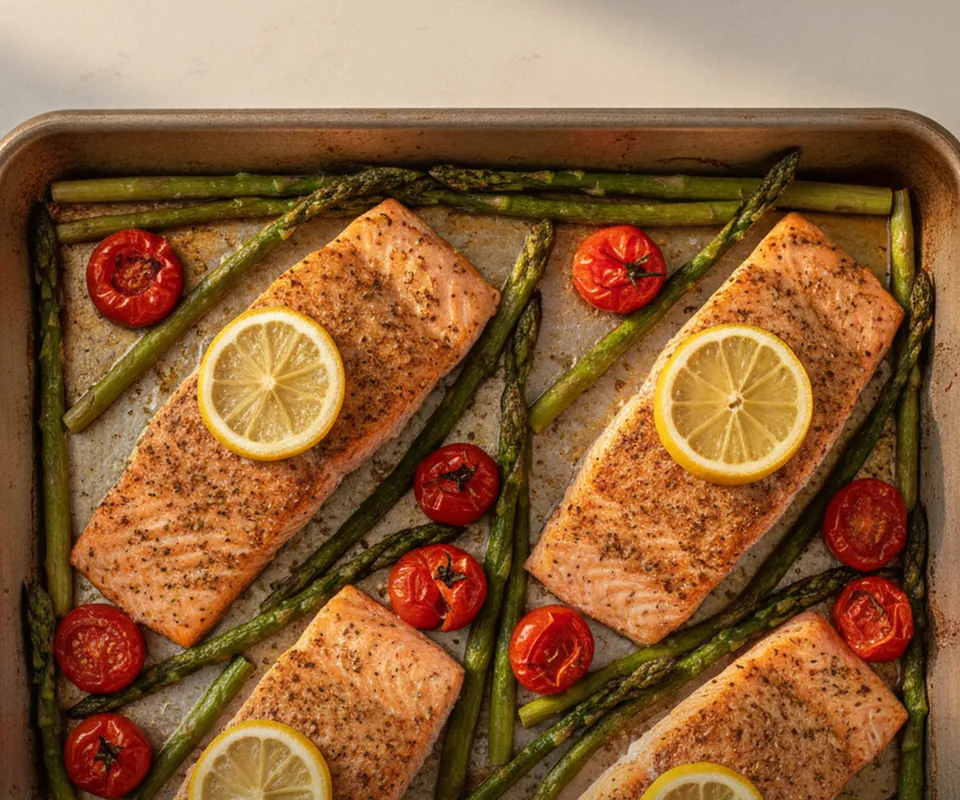
| Baked Salmon with Asparagus and Cherry Tomatoes | 25 min | 458 | 38 g | Sheet pan |
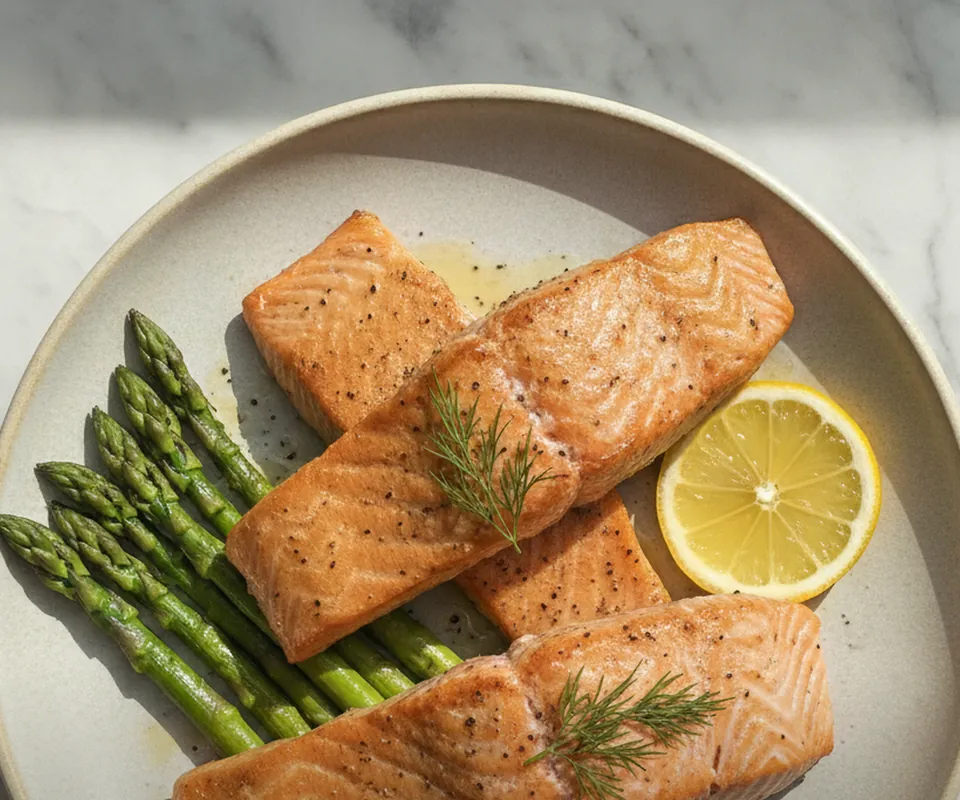
| Trader Joe's Umami Salmon and Asparagus | 20 min | 459 | 40 g | Sheet pan |
How to tell when salmon is done (and how to buy it)
The FDA's rule for fish is simple: cook it to an internal temperature of 145°F (63°C), measured in the thickest part. If you don't have a thermometer, check with a fork: done fish is opaque and the flesh separates easily into flakes. Every recipe here roasts at 400°F, where a typical 1-inch fillet takes about 12 to 15 minutes; thin tail pieces are done sooner and thick center cuts can need up to 18. Start checking at the low end of the range, because salmon goes from juicy to dry in a couple of minutes.
Farmed or wild? Both are good choices, and they are different fish on the plate. USDA data for cooked salmon shows how much they differ:
| Per 100 g cooked (3.5 oz) | Calories | Protein | Fat | Omega-3 (EPA + DHA) |
|---|---|---|---|---|
| Farmed Atlantic salmon | 206 | 22 g | 12 g | 2.2 g |
| Wild sockeye salmon | 156 | 26.5 g | 5.6 g | 0.9 g |
Farmed Atlantic salmon (the kind most supermarkets and Costco sell) is richer, more forgiving to cook and carries more omega-3 fat per serving. Wild sockeye is leaner, with more protein per calorie, and dries out faster, so take it out a couple of minutes early. Our nutrition numbers use farmed Atlantic salmon; with sockeye, each serving comes in roughly 60 calories lighter.
Fresh or frozen? Frozen salmon is a smart weeknight buy: it keeps 2 to 3 months in the freezer, and you can thaw just what you need. The FDA recommends thawing it in the fridge overnight, or sealing it in a plastic bag and submerging it in cold water; the microwave's defrost setting works if you cook it right away. Fresh salmon should go in the fridge at 40°F or below and be cooked within a day or two. It should smell fresh and mild, never sour or strongly fishy.
How much salmon a week? FDA and EPA advice lists salmon as a "Best Choice" fish, lower in mercury, and suggests 2 to 3 servings a week from that list, where a serving is 4 oz before cooking. Two of these dinners a week fits comfortably. To see how a 34 to 41 g serving fits your day, try our protein calculator.
Keep your salmon nights on your phone
Save these recipes in RecipeVault and you get calories and protein per serving, a grocery list built for you, and a Spicier or Kid-friendly version of any recipe in one tap. Free on iPhone and Android.
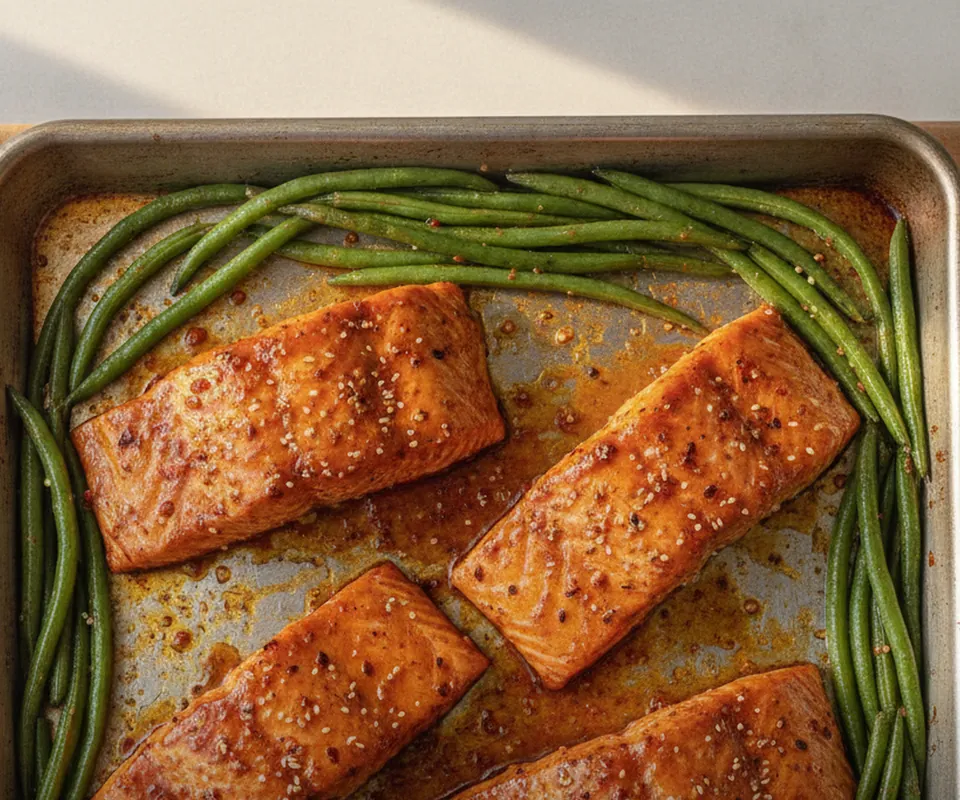
Honey Sriracha Salmon and Green Beans
Ingredients
Instructions
- 1
Heat the oven to 400°F (200°C) and line a large baking sheet with parchment paper.
- 2
Whisk the honey, sriracha, soy sauce, sesame oil and garlic in a small bowl to make the glaze.
- 3
Put the salmon on one side of the pan and the green beans on the other.
- 4
Spoon half the glaze over the salmon so each fillet is well coated.
- 5
Drizzle the rest over the green beans and toss them right on the pan.
- 6
Bake 12 to 18 minutes, depending on thickness, until the salmon flakes easily and reaches 145°F (63°C) in the thickest part.
- 7
If you like softer green beans, give them a 5-minute head start before the salmon goes in.
- 8
For a stickier glaze, broil 1 to 2 minutes at the end, watching closely so the honey doesn't burn.
- 9
Finish with sesame seeds and green onions and serve.
Why it works: the same glaze seasons the fish and the vegetables, so there is one bowl and one pan to wash. Honey burns fast under the broiler, so stay by the oven for that last minute. Milder for kids? Cut the sriracha to 1 teaspoon and add 1 more teaspoon of honey.
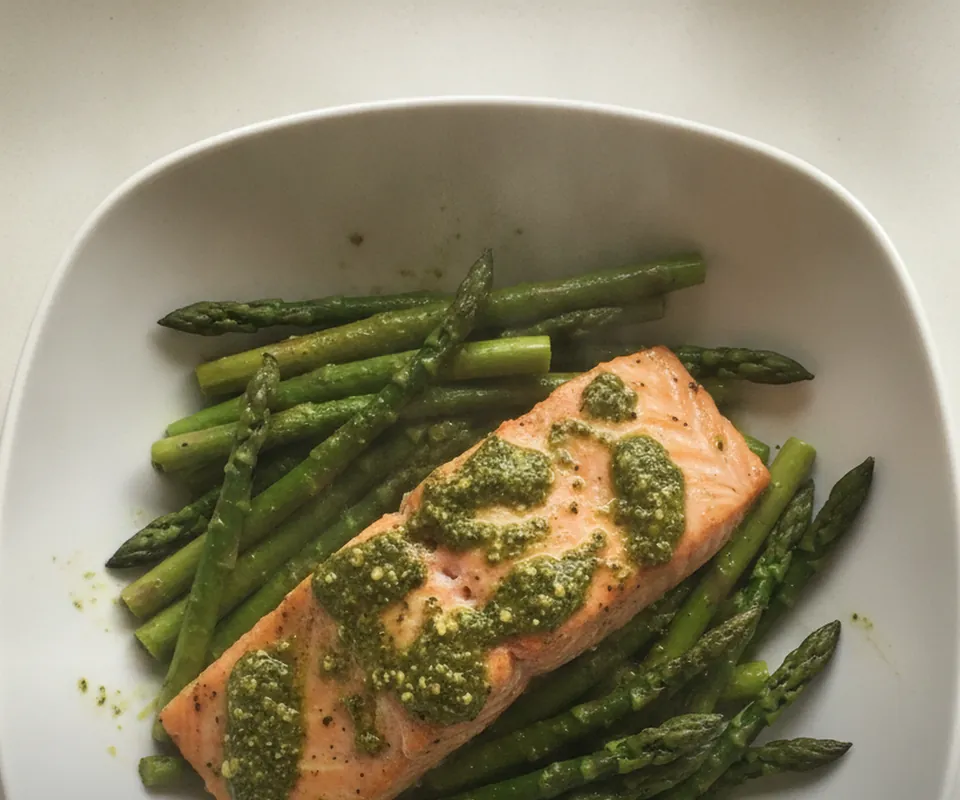
One-Pan Pesto Salmon and Asparagus
Ingredients
Instructions
- 1
Heat the oven to 400°F (200°C) and line a baking sheet with parchment paper.
- 2
Pat the salmon dry with paper towels and season both sides with the salt and pepper.
- 3
Set the fillets on the pan and spread 2 tablespoons of pesto over the top of each one.
- 4
Toss the asparagus with 1/2 tablespoon olive oil and a pinch of salt and pepper.
- 5
Arrange the asparagus around the salmon on the same pan.
- 6
Bake 12 to 15 minutes, until the salmon flakes easily with a fork (145°F / 63°C).
- 7
For crispier asparagus, broil for the last 1 to 2 minutes, watching carefully.
- 8
Plate the salmon and asparagus and finish with a squeeze of lemon or a pinch of red pepper flakes.
Why it works: pesto is oil, cheese, nuts and basil in one jar, so it seasons the fish and keeps the top from drying out. It is also why this is the richest recipe here. Lighter version: use 1 tablespoon of pesto per fillet and skip the tablespoon of oil on the fish; that saves about 150 kcal per serving.
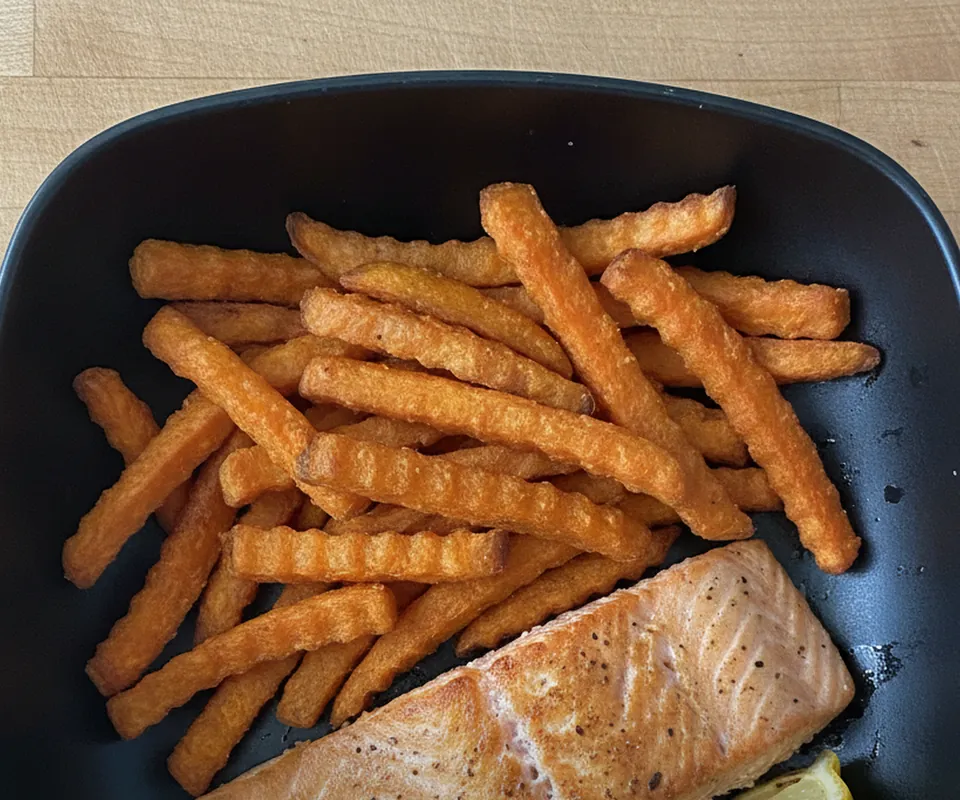
Air Fryer Crispy Salmon and Sweet Potato Fries
Ingredients
Instructions
- 1
Heat the air fryer to 400°F (200°C).
- 2
Toss the sweet potato fries with 1 tablespoon olive oil, the cornstarch if using, the chili powder and a pinch of salt until evenly coated.
- 3
Air fry the fries in a single layer, in batches if needed, 15 to 20 minutes, shaking the basket every 5 to 7 minutes, until golden and crisp.
- 4
While they cook, pat the salmon dry, rub with 1 teaspoon olive oil and season with the paprika, garlic powder, salt and pepper.
- 5
When the fries are nearly done, move them to a plate and put the salmon in the basket, skin side down.
- 6
Air fry the salmon 10 to 14 minutes, depending on thickness, until it flakes easily and reaches 145°F (63°C).
- 7
For crispy skin, flip the fillets halfway so the skin faces up for the last 5 minutes.
- 8
Put the fries back in for 1 to 2 minutes to re-crisp if needed.
- 9
Serve with lemon wedges, and a Greek yogurt dill sauce or sriracha mayo if you like.
Why it works: cornstarch pulls moisture off the surface of the sweet potato, which is what makes air fryer fries crisp instead of limp. Don't crowd the basket; a single layer is the whole trick. This came from our under-600-calorie fakeaway collection, and it lands at 595 kcal with 38 g protein.
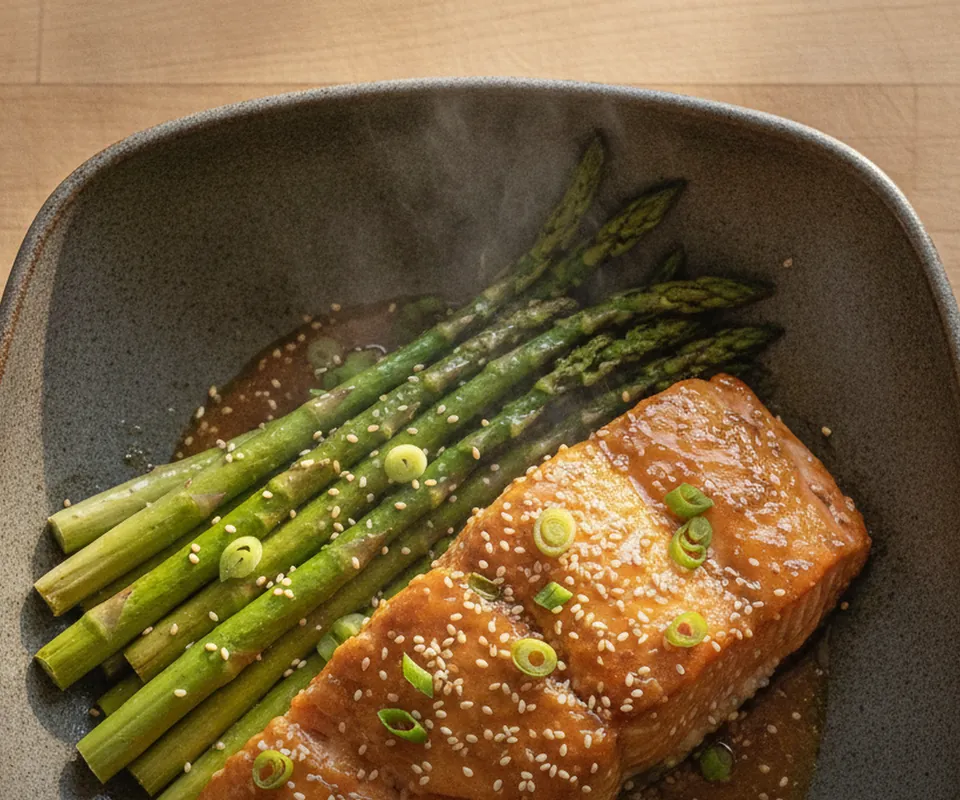
Sticky Ginger Garlic Salmon with Asparagus
Ingredients
Instructions
- 1
Heat the oven to 400°F (200°C) and line a baking sheet with parchment paper.
- 2
Whisk the soy sauce, honey, ginger, garlic, rice vinegar and sesame oil in a small bowl to make the glaze.
- 3
Put the salmon on one side of the pan, drizzle with 1 tablespoon olive oil and season with salt and pepper.
- 4
Toss the asparagus with the other tablespoon of oil, salt and pepper on the other side of the pan.
- 5
Brush about half the glaze over the salmon.
- 6
Bake 10 to 12 minutes, until the salmon is almost cooked through.
- 7
Take the pan out and brush the rest of the glaze over the salmon.
- 8
Bake 3 to 5 minutes more, until the salmon flakes easily (145°F / 63°C) and the asparagus is tender-crisp.
- 9
For extra caramelization, broil for the last 1 to 2 minutes, watching closely.
- 10
Sprinkle with sesame seeds and green onions and serve with brown rice or quinoa.
Why it works: glazing twice gives you a sticky, lacquered top. If all the glaze goes on at the start, the honey scorches before the fish is done. This is the one to batch: 2 pounds feeds 6, and the leftovers make an easy rice bowl for lunch.
Lemon Herb Salmon and Asparagus Foil Packets
Ingredients
Instructions
- 1
Heat the oven to 400°F (200°C). Tear off two large sheets of heavy-duty foil, about 18 inches each.
- 2
Put half the asparagus in the center of each sheet and lay a salmon fillet on top.
- 3
Drizzle each fillet and its asparagus with 1/2 tablespoon olive oil and season well with salt and pepper.
- 4
Mix the dill, parsley, garlic powder and onion powder and sprinkle half over each packet.
- 5
Lay 2 or 3 lemon slices on each fillet.
- 6
Bring the long sides of the foil together over the fish, fold them down tightly, then crimp the short ends so no steam can escape.
- 7
Set the packets on a baking sheet and bake 15 to 20 minutes, until the salmon flakes easily (145°F / 63°C).
- 8
Open the packets carefully, because the steam is hot, and serve from the foil or on plates with an extra squeeze of lemon.
Why it works: the sealed packet steams the fish in its own juices and the lemon, so it is very hard to dry out. Assemble the packets the night before and keep them in the fridge, then bake straight from cold (add 2 to 3 minutes). Leftovers keep 3 to 4 days in the fridge and reheat gently in the oven or microwave.
Baked Salmon with Asparagus and Cherry Tomatoes
Ingredients
Instructions
- 1
Heat the oven to 400°F (200°C) and line a large baking sheet with parchment paper.
- 2
Put the salmon on one side of the pan and the asparagus and tomatoes on the other.
- 3
Drizzle everything with the olive oil.
- 4
Mix the garlic, dill, salt and pepper in a small bowl and sprinkle it over the salmon and vegetables.
- 5
Lay lemon slices over the fillets and scatter a few among the vegetables.
- 6
Roast 12 to 18 minutes, depending on thickness, until the salmon flakes easily (145°F / 63°C), the asparagus is tender-crisp and the tomatoes start to burst.
- 7
For a little char on the asparagus, broil for the last 1 to 2 minutes, watching closely.
- 8
Serve right away with lemon wedges and a pinch of red pepper flakes if you like.
Why it works: cherry tomatoes burst in the oven and turn into a quick, juicy sauce for the fish, so you don't need to make one. At 10 g carbs per serving it is naturally low-carb; add orzo, couscous or crusty bread for a bigger dinner.
Trader Joe's Umami Salmon and Asparagus
Ingredients
Instructions
- 1
Heat the oven to 400°F (200°C) and line a baking sheet with parchment paper.
- 2
Pat the salmon dry with paper towels and season both sides generously with the umami seasoning.
- 3
Put the fillets on one side of the pan.
- 4
Put the asparagus on the other side, drizzle with the olive oil and toss to coat, keeping it in a single layer.
- 5
Roast 12 to 15 minutes, until the salmon flakes easily and reaches 145°F (63°C) and the asparagus is tender-crisp. Thicker fillets take longer.
- 6
Serve right away with fresh dill or a squeeze of lemon.
Why it works: a mushroom-based seasoning blend adds savory depth without a sauce. No Trader Joe's nearby? Use 1 tablespoon of any savory salt-free blend plus 1/2 teaspoon salt, or try the glaze from the ginger garlic salmon.
Mix and match: one method, five sauces
Once you have the method down (400°F, parchment, 12 to 18 minutes), the sauce is what makes it feel like a different dinner. Every topping in this guide works on any of the sheet pan recipes, so you can keep the vegetable you have and change the flavor:
| Sauce or topping | From | When it goes on | Tastes like |
|---|---|---|---|
| Honey sriracha glaze | Recipe 1 | Before baking; broil at the end | Sweet, spicy, sticky |
| Basil pesto | Recipe 2 | Before baking | Herby, rich, Italian |
| Ginger garlic soy glaze | Recipe 4 | Half before, half 3 to 5 min before the end | Teriyaki-style, savory |
| Lemon, dill and garlic | Recipes 5 and 6 | Before baking | Bright, light, classic |
| Umami seasoning | Recipe 7 | Before baking | Savory, mushroomy, no sauce |
One rule carries across all of them: anything with honey or maple syrup burns quickly, so add sweet glazes in two stages or keep a close eye on the broiler. Oil-based toppings like pesto and the lemon herb mix can go on at the start.
A two-salmon-night week
Buy one family pack of salmon (or a bag of frozen fillets) and plan it across the week like this:
| Day | What to do | Why |
|---|---|---|
| Sunday | Make the sticky ginger garlic salmon for 6 with a pot of brown rice | Dinner tonight, rice bowls for 2 lunches |
| Monday | Move 2 frozen fillets from the freezer to the fridge | They thaw overnight, ready for Tuesday |
| Tuesday | Assemble lemon herb foil packets and bake | No pan to scrub on a busy night |
| Thursday | Honey sriracha salmon | 20 minutes, one pan |
| Weekend | Air fryer salmon and fries | Fakeaway night under 600 kcal |
Feeding a different number of people? The recipe scaler resizes any recipe here, the recipe cost calculator shows what each serving costs at your store's prices, and the free meal plan generator builds a full week around your calories and protein.
Tips for better salmon every time
- Pat it dry. A dry surface takes seasoning better and browns instead of steaming.
- Line the pan. Parchment stops skin and sticky glazes from welding to the sheet, which is most of the cleanup.
- Match the thickness. If your fillets vary a lot, put the thin ones in a few minutes later so everything finishes together.
- Skin side down. Leave the skin on while cooking; it protects the fish from the hot pan, and the flesh lifts right off it afterwards.
- Check early. Start testing at the shortest time in the recipe. You can always give it 2 more minutes.
- Store leftovers fast. Refrigerate cooked salmon within 2 hours and eat it within 3 to 4 days. It is great cold, flaked over a salad or into a rice bowl.
Want more ideas? Turn one store-bought bird into a week of dinners with our rotisserie chicken recipes, warm up with these easy soup recipes, find more high-protein dinners, or let What can I make? pick tonight's dinner from what is already in your kitchen. For storage times on everything else in your fridge, check our food storage guide.
Frequently asked questions
What is the best way to cook salmon?
For weeknights, roasting on a parchment-lined sheet pan at 400°F is the easiest and most reliable way: 12 to 18 minutes depending on thickness, with a vegetable on the same pan. The air fryer (400°F, 10 to 14 minutes) gives crispier skin, and foil packets steam the fish so it stays moist.
How long do you bake salmon at 400°F?
Usually 12 to 15 minutes for a fillet about 1 inch thick, and up to 18 minutes for thicker center cuts. Start checking at 12 minutes. In a sealed foil packet, allow 15 to 20 minutes.
What temperature should salmon be cooked to?
The FDA recommends cooking fish to 145°F (63°C), measured in the thickest part. Without a thermometer, the salmon is done when it is opaque and flakes easily with a fork.
Is farmed or wild salmon healthier?
Both are healthy. According to USDA data, farmed Atlantic salmon has more fat and more omega-3 (about 2.2 g EPA and DHA per 100 g cooked), while wild sockeye is leaner with more protein per calorie (26.5 g per 100 g cooked). Choose based on taste, budget and how you plan to cook it.
Can you cook salmon from frozen?
Yes, but it cooks unevenly and takes longer, so for these recipes thaw it first: overnight in the fridge, or sealed in a plastic bag in cold water. Cook it soon after thawing.
How long does cooked salmon last in the fridge?
Cooked salmon keeps 3 to 4 days in a sealed container in the fridge. Refrigerate it within 2 hours of cooking. Raw salmon should be cooked within 1 to 2 days of buying, or frozen.
How much protein is in a salmon fillet?
A 6 oz raw fillet of farmed Atlantic salmon has about 35 g of protein. The recipes in this guide land between 34 and 41 g per serving, including the vegetables.
Fish night, planned
RecipeVault saves recipes from any website, TikTok, Instagram or a photo of a handwritten card, plans your week and turns it into one grocery list. Free on iPhone and Android.