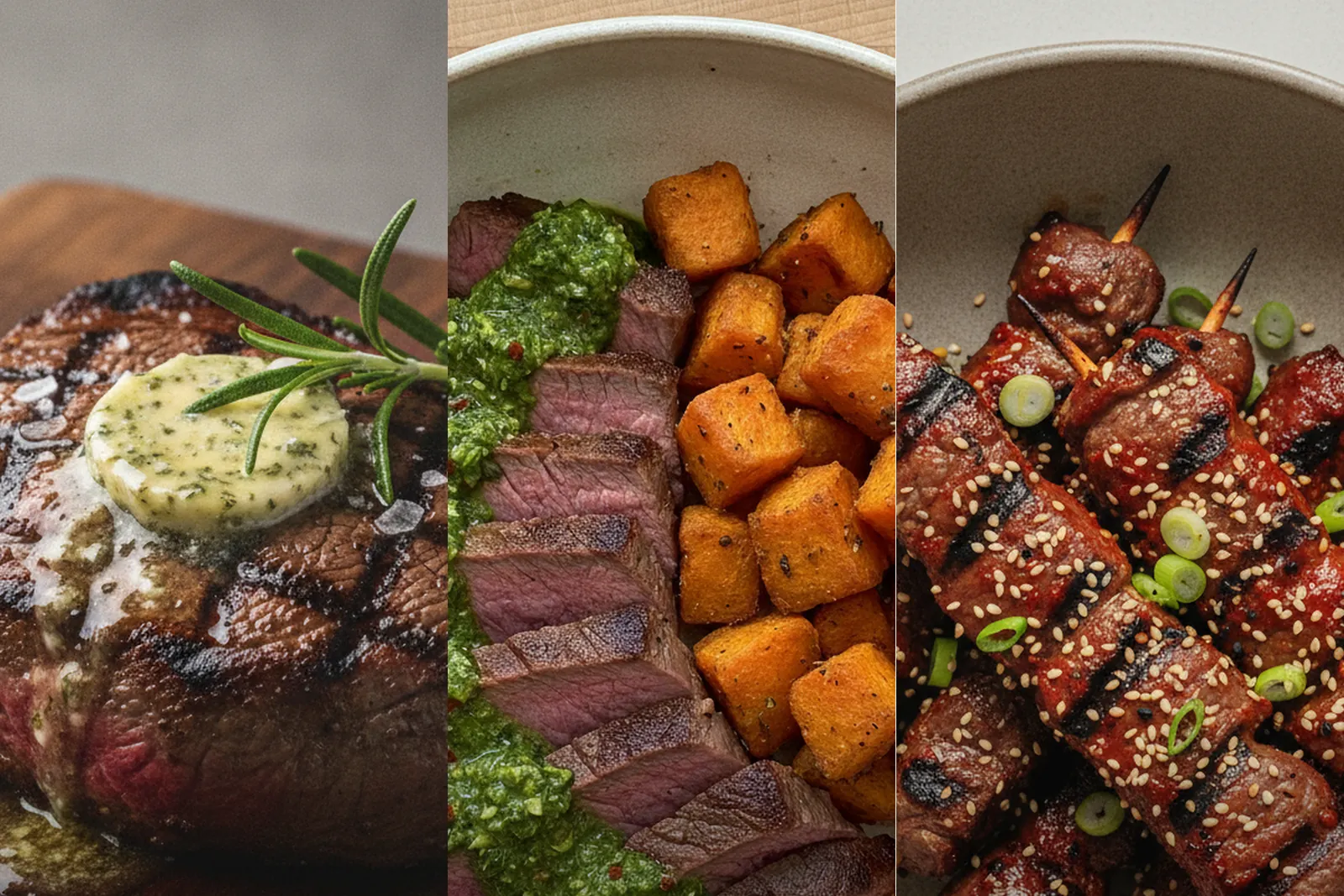
Quick answer: these steak recipes are six high-protein dinners built on one 6 oz steak (or a pound for two): pan-seared steak with garlic-herb butter, gochujang steak skewers, a steak and asparagus stir-fry, chimichurri steak, a blackened steak salad and Costco sirloin steak bites with broccoli. Each has calories and protein per serving and a free printable card, plus the three things that decide whether steak turns out well: the right internal temperature, how long to rest it and which cut to buy.
Steak is one of the fastest high-protein dinners you can make: most of these are on the table in 20 to 25 minutes, and one 6 oz sirloin gives you about 36 g of protein before you add anything else. Five recipes come from our collection of high-protein 6 oz steak dinners, and the steak bites are the steak dinner from our Costco 20-minute meals. We rewrote every step so it is clear, worked out the nutrition from the actual ingredients, and were honest where a recipe is heavier than it looks (looking at you, chimichurri).
If you only read one section, make it the temperature chart. Cooking times on a recipe card are a guess that depends on your stove, your pan and how thick your steak is; an instant-read thermometer takes the guessing out of it.
Pick your steak dinner
Tap a dish to jump to its recipe, nutrition and free recipe card.
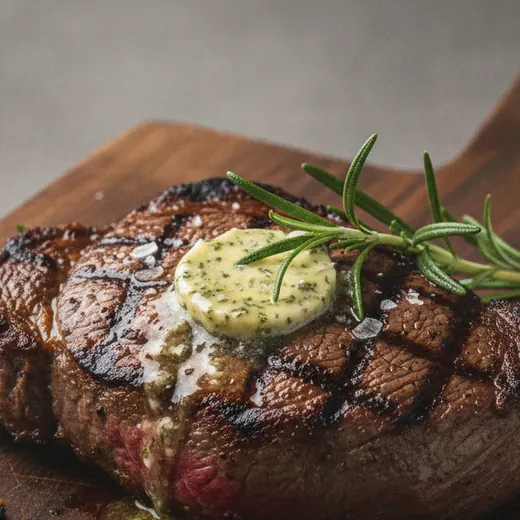 20 minPan-Seared Steak604 kcal · 36 g protein
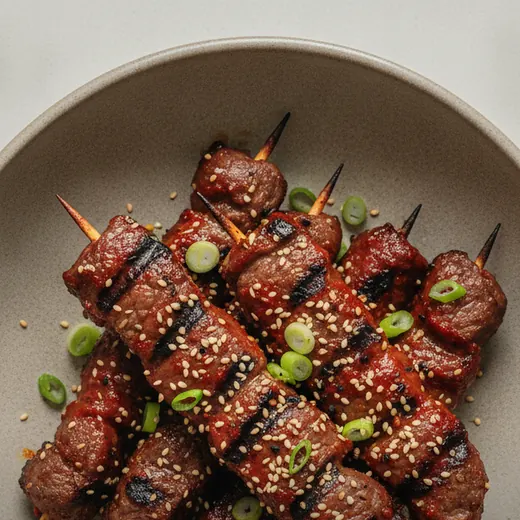 50 minGochujang Steak Skewers482 kcal · 42 g protein
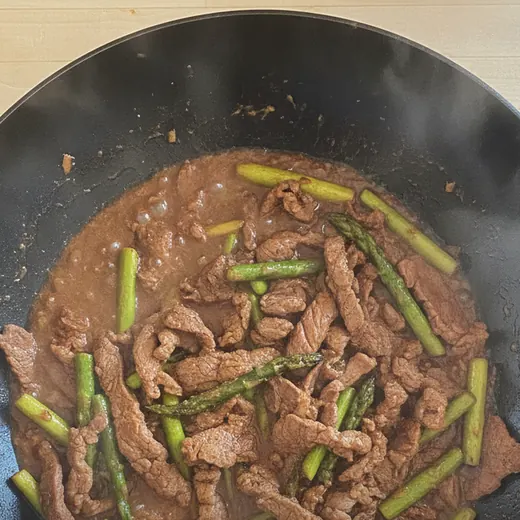 25 minSteak and Asparagus Stir-Fry630 kcal · 45 g protein
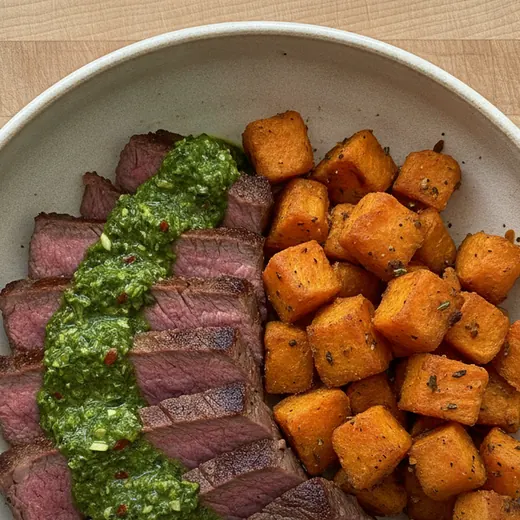 40 minChimichurri Steak790 kcal · 38 g protein
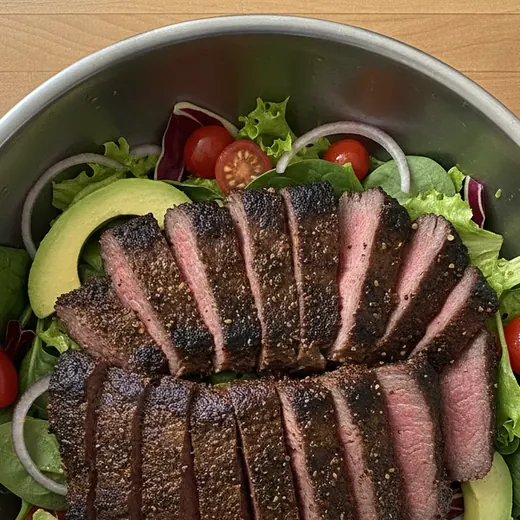 25 minBlackened Steak Salad698 kcal · 40 g protein
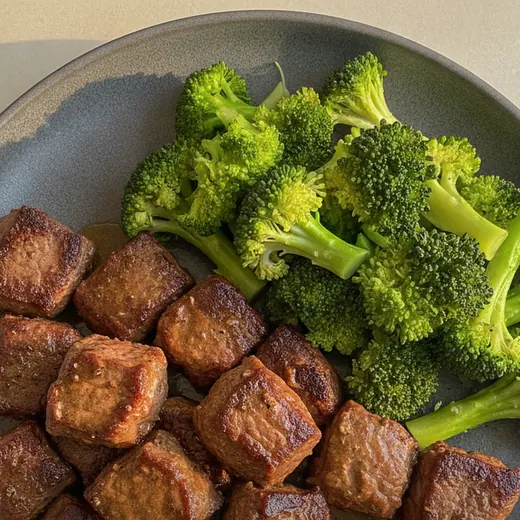 20 minSirloin Steak Bites and Broccoli551 kcal · 54 g protein
Steak recipes at a glance
Calories and protein are per serving, calculated from the ingredients with the same food database as our recipe calorie calculator, plus USDA values for flank steak, asparagus and oyster sauce and the Sempio label for gochujang. Optional garnishes and rice are not included.
| Recipe | Time | Calories | Protein | Cut |
|---|---|---|---|---|
| Pan-Seared Steak With Garlic-Herb Butter | 20 min | 604 | 36 g | Sirloin or ribeye |
| Spicy Gochujang Steak Skewers | 50 min | 482 | 42 g | Flank or sirloin |
| Quick Steak and Asparagus Stir-Fry | 25 min | 630 | 45 g | Ribeye or sirloin |
| Argentinian Chimichurri Steak | 40 min | 790 | 38 g | Flat iron or skirt |
| Blackened Steak Salad With Avocado and Lime Vinaigrette | 25 min | 698 | 40 g | Sirloin |
| Quick Sirloin Steak Bites and Broccoli (Costco Run) | 20 min | 551 | 54 g | Top sirloin or flat iron |
How much protein is in a 6 oz steak? Protein and fat by cut
Every recipe here starts with 6 oz of raw steak, and raw weight is what you buy. Steak loses water as it cooks: USDA FoodData Central lists raw top sirloin at 22.0 g of protein per 100 g and broiled top sirloin at 29.0 g, which means the cooked steak weighs about three quarters of the raw one. So a 6 oz raw sirloin becomes roughly a 4.5 oz cooked steak with about 36 to 37 g of protein. If you track macros, weigh it raw, or use cooked values for cooked weight; mixing the two is the most common way protein counts go wrong.
The cut matters more for fat than for protein. Per 100 g of cooked steak, from USDA FoodData Central:
| Cut (cooked) | Calories | Protein | Fat | Used here |
|---|---|---|---|---|
| Top sirloin, broiled | 219 | 29.0 g | 10.5 g | Garlic butter, salad, steak bites |
| Flank, broiled | 192 | 27.7 g | 8.2 g | Gochujang skewers |
| Top blade (flat iron), grilled | 210 | 27.6 g | 11.1 g | Chimichurri steak |
| T-bone, grilled | 294 | 24.2 g | 21.1 g | Not used |
| Ribeye, grilled | 303 | 22.9 g | 23.5 g | Option in garlic butter and stir-fry |
Ribeye has about twice the fat of sirloin and less protein per bite, which is why every macro on this page uses the leaner option when a card offers two. Ribeye is still the better steak if you want maximum juiciness and flavor; just know that swapping it in adds roughly 80 to 100 calories to a cooked 4.5 oz portion. Want to know how your dinner fits your daily target? The free protein calculator works it out.
What a 6 oz steak dinner costs
The U.S. Bureau of Labor Statistics tracks average supermarket prices. Boneless USDA Choice sirloin averaged $14.11 per pound in September 2026 (the latest month published), and boneless round steak $10.11 per pound in October 2026. At the sirloin average, the 6 oz of steak in each single-serving recipe costs about $5.30, and raw sirloin's 22 g of protein per 100 g works out to roughly 7 g of protein per dollar. Prices vary a lot by store and region, and warehouse clubs often sell larger packs for less per pound; plug your own receipt into the recipe cost calculator to price any of these dinners exactly.
Steak doneness temperatures
Use an instant-read thermometer in the thickest part of the steak, away from bone. These are the common doneness ranges from ThermoWorks' beef temperature guide; the cards in this guide aim for medium-rare.
| Doneness | Final temperature | What it looks like |
|---|---|---|
| Rare | 120 to 130°F | Cool to warm red center |
| Medium-rare | 130 to 135°F (54 to 57°C) | Warm red-pink center; what these cards aim for |
| Medium | 135 to 140°F | Pink center |
| Medium-well | 145 to 155°F | Mostly brown, a trace of pink |
| Well done | 155°F and up | Brown throughout |
- The official safe temperature is 145°F. USDA's Food Safety and Inspection Service and FoodSafety.gov list 145°F (63°C) with a 3-minute rest as the safe minimum for beef steaks and roasts. Medium-rare is below that; many people eat it, but if you are cooking for someone pregnant, very young, older or with a weakened immune system, cook to 145°F.
- Ground beef is different: 160°F, because grinding mixes surface bacteria all the way through. That is why the steak bites, which are whole cubes of steak, can still be medium-rare but a burger should not be.
- Pull it early. Steak keeps cooking after it leaves the pan. ThermoWorks recommends taking beef off the heat 3 to 10°F below your target: the low end for thin steaks like these, the high end for thick cuts and roasts.
How long to rest steak
Every card here rests the steak 5 to 7 minutes (5 for the skewers and bites), and that is the right range for a 1-inch steak. Resting does two jobs: the last few degrees of carryover cooking finish the center, and the juices settle so less of them end up on the cutting board. Tent it loosely with foil, as the chimichurri card does, if your kitchen is cold; wrapping it tightly steams the crust you worked for.
Which steak to buy for each recipe
- Pan-searing and salads: top sirloin. Lean, tender enough for a quick sear, and the most affordable of the tender cuts.
- Skewers and steak bites: sirloin or flat iron cut into 1-inch cubes. Avoid "stew meat", which is from tougher cuts that need long braising.
- Stir-fry: sirloin, flank or ribeye sliced as thin as you can. Ten minutes in the freezer firms the steak and makes thin slicing much easier.
- Chimichurri and marinades: skirt, flank and flat iron. They are thinner, take a marinade or sauce well and cook in minutes, but must be sliced against the grain.
Keep steak night one tap away
Save these steak dinners in RecipeVault to see calories and protein per serving, scale a recipe for the whole family and send the ingredients to your grocery list. Free on iPhone and Android.
Pan-Seared Steak With Garlic-Herb Butter
Ingredients
Instructions
- 1
Pat the steak very dry with paper towels and season both sides generously with the salt and pepper.
- 2
Heat the olive oil in a heavy, oven-safe skillet (cast iron is best) over medium-high heat until it shimmers.
- 3
Lay the steak in the pan and sear it without moving it for 3 to 4 minutes per side for medium-rare, longer for more doneness.
- 4
Turn the heat down to medium-low and add the butter, garlic, rosemary and thyme.
- 5
As the butter melts, tilt the pan and spoon the herb butter over the steak continuously for 1 to 2 minutes.
- 6
Optional: for a thicker steak, move the skillet to a 375°F (190°C) oven for 2 to 3 minutes to finish.
- 7
Move the steak to a cutting board and rest it 5 to 7 minutes so the juices settle back into the meat.
- 8
Slice against the grain, spoon over the pan juices and serve right away.
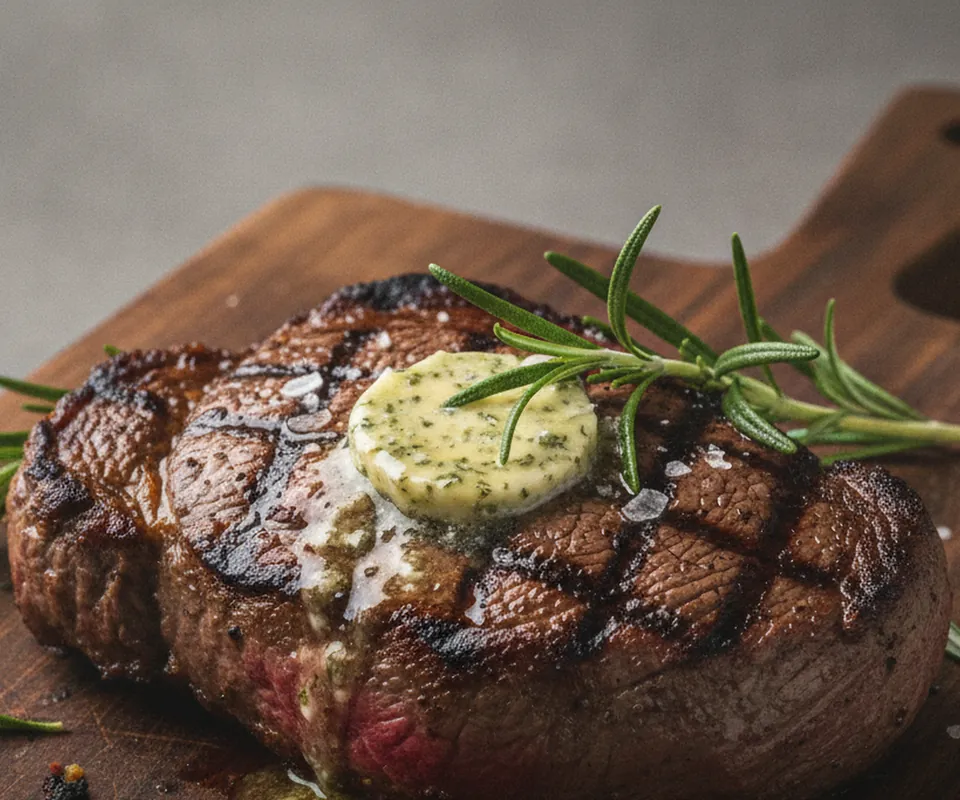
Why it works: a dry surface and a hot pan give you the crust; the butter goes in only after the heat is lowered, so the milk solids brown instead of burning. Our numbers count all 2 tbsp of butter, but much of it stays in the pan: spoon only half onto the plate and you save about 100 calories. With sirloin this is the leanest version; ribeye adds noticeably more fat (see the cut table).
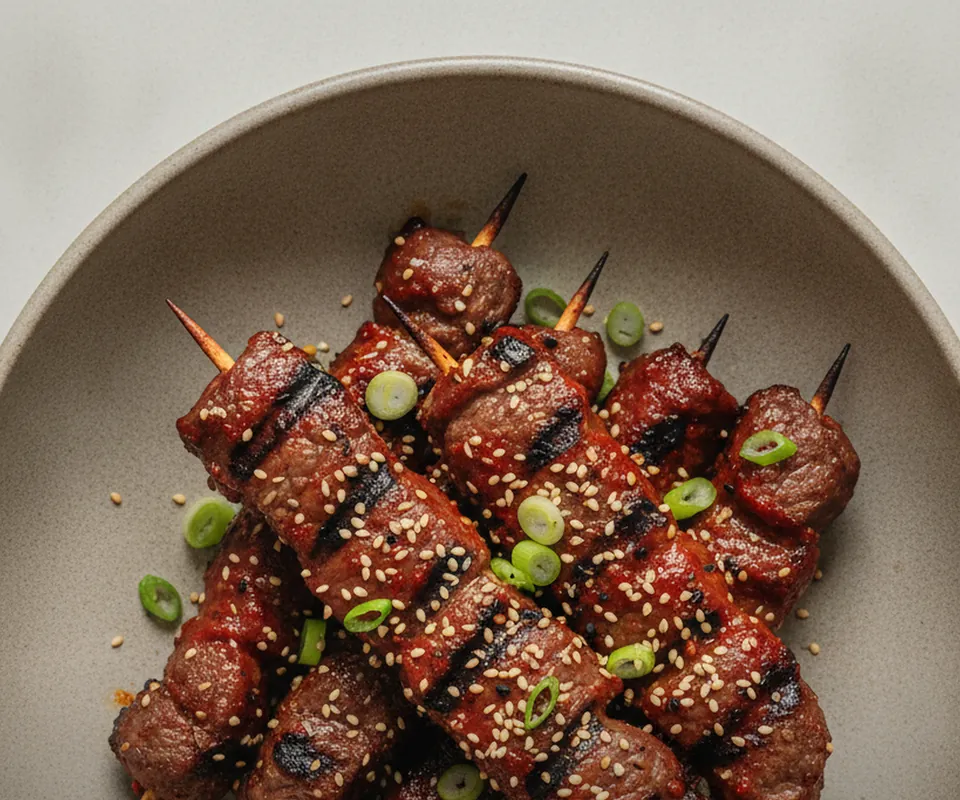
Spicy Gochujang Steak Skewers
Ingredients
Instructions
- 1
In a medium bowl, whisk the gochujang, soy sauce, sesame oil, rice vinegar, brown sugar, garlic and ginger into a marinade.
- 2
Add the steak cubes and toss until every piece is coated. Cover and refrigerate at least 30 minutes, or up to 2 hours.
- 3
While the steak marinates, soak the skewers in water for at least 20 minutes so they don't burn, and heat a grill or grill pan to medium-high.
- 4
Thread the steak onto the skewers, leaving a little space between pieces so they cook evenly.
- 5
Lightly oil the grill grates or grill pan.
- 6
Grill the skewers 2 to 3 minutes per side, turning, until the steak is nicely charred and done the way you like it; for medium-rare aim for 130 to 135°F (54 to 57°C) inside.
- 7
Rest the skewers 5 minutes, then sprinkle with sesame seeds and scallions and serve.
Why it works: gochujang is thick and sugary, so it clings to the cubes and caramelizes fast on a hot grill; that is also why it can burn, so keep the heat at medium-high, not high. Most of the 33 g of carbs come from the gochujang itself (about 13 g per tablespoon on the Sempio label). Flank is lean and full of beef flavor, but cut it into cubes across the grain so the pieces stay tender.
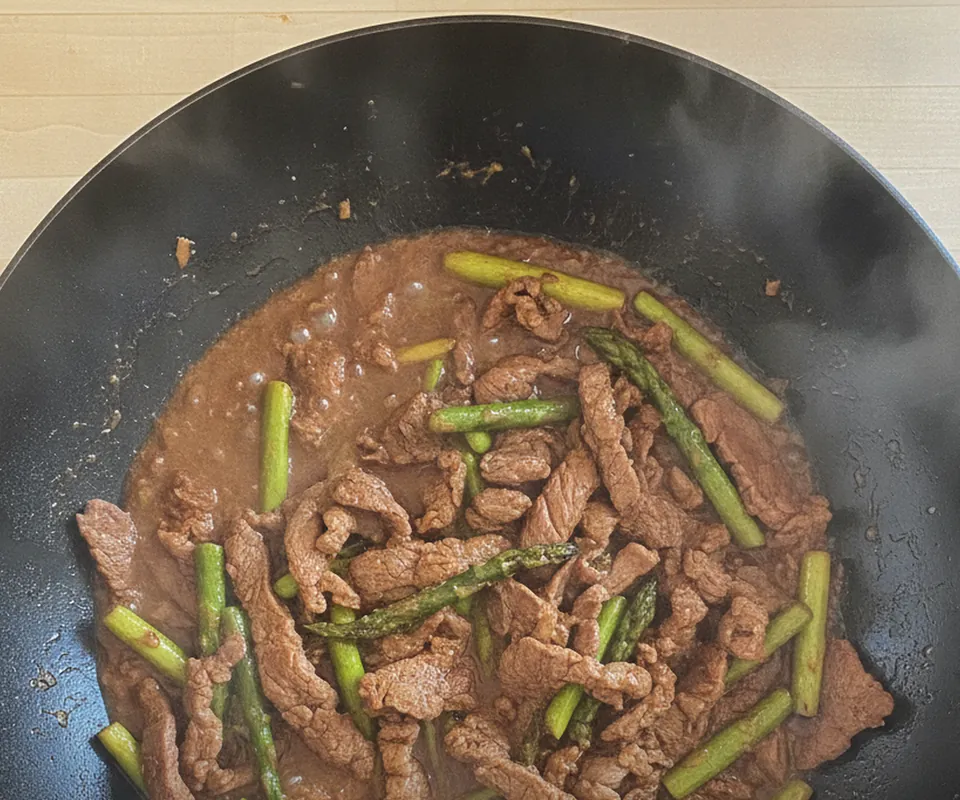
Quick Steak and Asparagus Stir-Fry
Ingredients
Instructions
- 1
In a small bowl, mix the sliced steak with the 1/2 tbsp soy sauce, cornstarch and sesame oil, and set it aside.
- 2
In another small bowl, whisk the beef broth, oyster sauce, 1 tbsp soy sauce, rice vinegar, brown sugar, garlic and ginger to make the sauce.
- 3
Heat 1 tbsp of the cooking oil in a large wok or skillet over high heat until it just starts to smoke.
- 4
Add the steak in a single layer and stir-fry 1 to 2 minutes, until browned but not cooked through. Move it to a plate.
- 5
Add the remaining 1/2 tbsp oil to the hot wok, then the asparagus, bell pepper and onion. Stir-fry 3 to 4 minutes until crisp-tender.
- 6
Return the steak to the wok, pour in the sauce and toss quickly to coat.
- 7
Cook 1 to 2 minutes more, stirring constantly, until the sauce thickens and coats everything.
- 8
Take it off the heat right away so the steak doesn't overcook, and serve hot, with steamed brown rice or cauliflower rice if you like.
Why it works: the cornstarch coating (a quick version of the Chinese "velveting" technique) protects the thin slices so they stay tender in a smoking-hot wok, and searing the steak first, then pulling it out, keeps it from stewing while the vegetables cook. Rice is not counted: 1 cup of cooked brown rice adds roughly 250 calories. A whole bunch of asparagus is a lot of vegetables for one person, which is part of why this bowl is so filling.
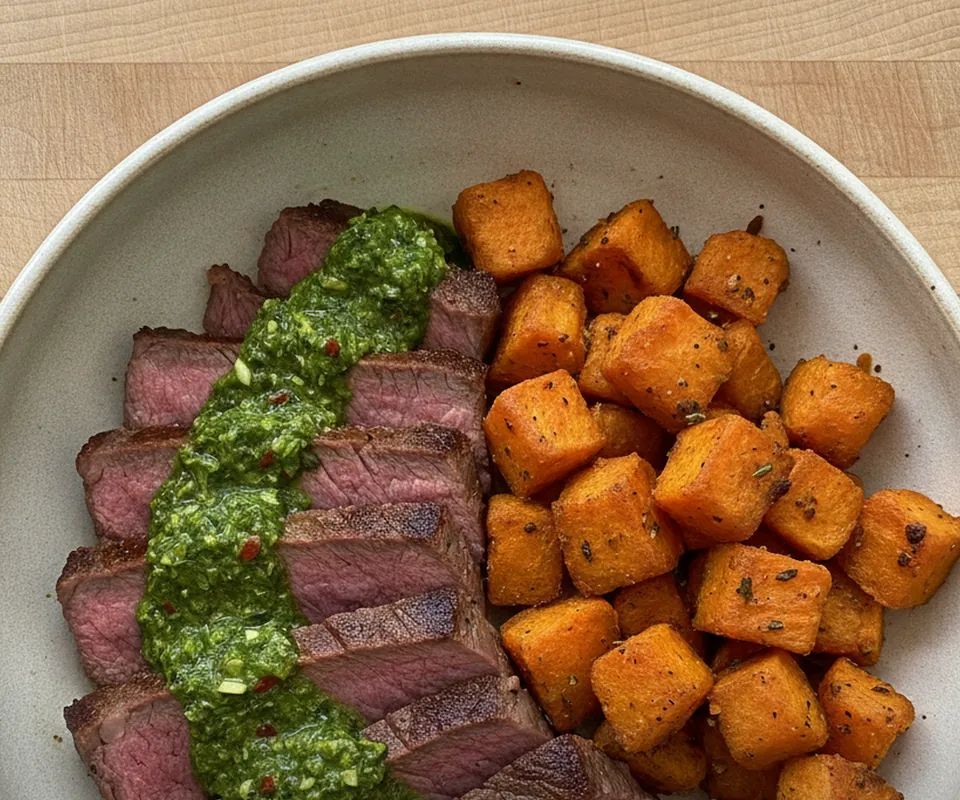
Argentinian Chimichurri Steak
Ingredients
Instructions
- 1
Make the chimichurri: stir together the parsley, oregano, garlic, red wine vinegar, red pepper flakes and olive oil, season with salt and pepper, and let it sit at least 15 minutes so the flavors meld.
- 2
If making the side, heat the oven to 400°F (200°C). Toss the diced sweet potato with 1 tsp olive oil, paprika and salt and roast 20 to 25 minutes until tender and lightly caramelized.
- 3
Pat the steak completely dry and season both sides with the salt and pepper.
- 4
Heat 1 tbsp olive oil in a heavy skillet over medium-high heat until shimmering, almost smoking.
- 5
Sear the steak 3 to 4 minutes per side for medium-rare, or longer for more doneness; medium-rare is 130 to 135°F (54 to 57°C) on an instant-read thermometer.
- 6
Move the steak to a cutting board, tent it loosely with foil and rest it 5 to 7 minutes.
- 7
Slice the steak thinly against the grain.
- 8
Serve right away with chimichurri spooned over the top and the roasted sweet potato on the side.
Honest note: the card's chimichurri has 1/4 cup of olive oil and makes about 2/3 cup of sauce, much more than one steak needs, so our numbers count half of it. Eat the whole batch and the plate is about 1,030 calories. Keep the rest in the fridge and use it on eggs, chicken or tomorrow's steak. Skirt and flat iron both have long, obvious grain lines: slicing across them is what makes these cuts tender.
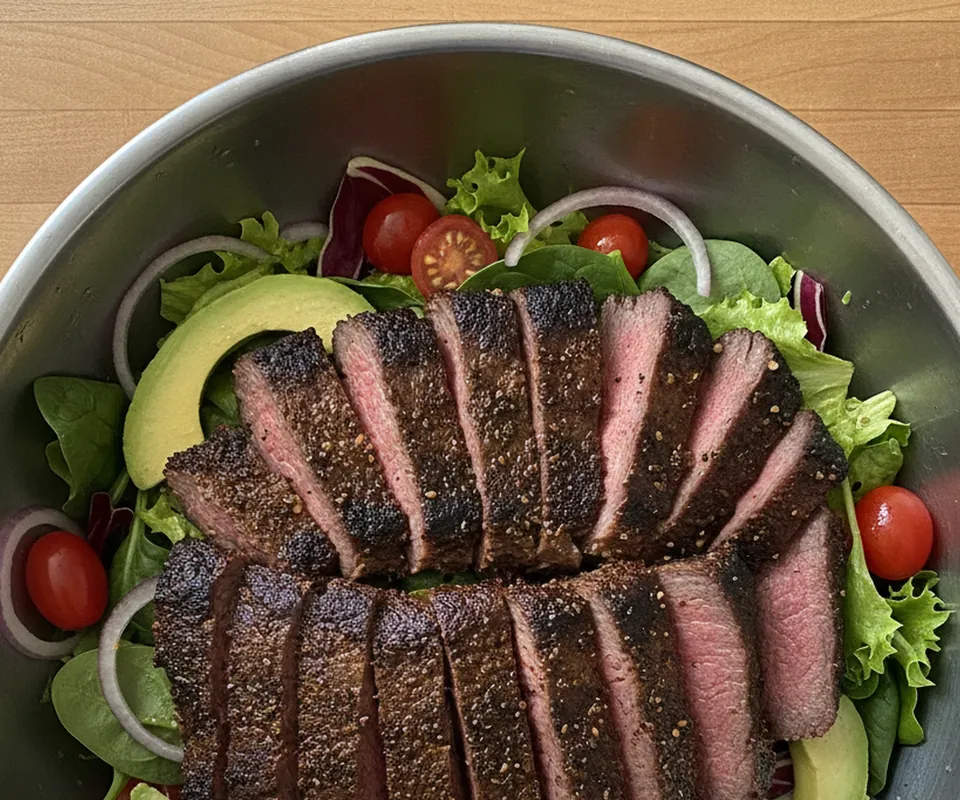
Blackened Steak Salad With Avocado and Lime Vinaigrette
Ingredients
Instructions
- 1
In a small bowl, mix all the blackened seasoning ingredients.
- 2
Pat the steak dry and rub the seasoning firmly over both sides.
- 3
Heat a heavy cast-iron skillet over high heat until it is very hot and just starting to smoke. Do not add oil.
- 4
Sear the steak 2 to 3 minutes per side until a dark, crusty blackened coating forms, adjusting the time for doneness; medium-rare is 130 to 135°F (54 to 57°C). Turn on the vent: it will smoke.
- 5
Rest the steak on a cutting board 5 to 7 minutes.
- 6
While it rests, whisk the olive oil, lime juice, honey, Dijon and a pinch of salt and pepper into a vinaigrette.
- 7
Arrange the greens, tomatoes, red onion and avocado in a large bowl or on plates.
- 8
Slice the steak thinly against the grain, lay it over the salad, drizzle with the vinaigrette and serve immediately.
Why it works: blackening is a dry spice crust seared in a ripping-hot dry pan, so the steak itself takes no added oil. The fat in this salad comes from the avocado and the 2 tbsp of oil in the vinaigrette: use 1 tbsp and it drops by about 120 calories. Toss the dressing on at the table so the greens don't wilt under warm steak.
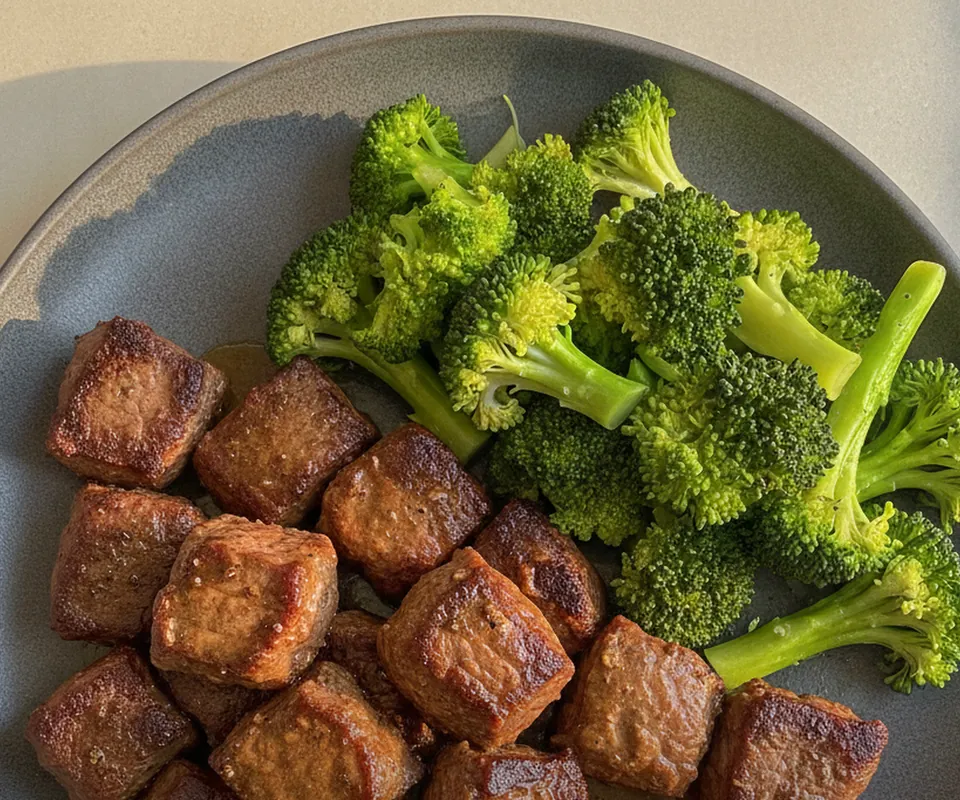
Quick Sirloin Steak Bites and Broccoli (Costco Run)
Ingredients
Instructions
- 1
Pat the steak cubes dry with paper towels. In a bowl, toss them with the olive oil, garlic powder, onion powder, salt and pepper until evenly coated.
- 2
Heat a large skillet (cast iron works best) over high heat until it is lightly smoking. A very hot pan is what gives you a sear.
- 3
Add the steak in a single layer without crowding (cook in two batches if needed) and sear 2 to 3 minutes without moving.
- 4
Flip and cook 2 to 3 minutes more for medium-rare to medium.
- 5
While the steak cooks, steam the frozen broccoli according to the package, in the microwave or on the stove, until tender-crisp.
- 6
Toss the hot broccoli with the butter and red pepper flakes, if using.
- 7
Move the steak bites to a plate and rest them 5 minutes.
- 8
Divide the steak and broccoli between two plates and finish with balsamic glaze or lemon if you like.
Why it works: this is the steak dinner for two from one Costco run, and the one we would make most often: a pound of steak and a pound of frozen broccoli, no chopping, 20 minutes. The card's own numbers (480 calories, 50 g protein) only make sense for two servings, so that is how it is written here. Crowding is the enemy: if the cubes don't fit in one layer, sear them in two batches or they steam and turn grey.
Which steak recipe should you make?
- You want the most protein: the steak bites and broccoli have 54 g per serving, and the stir-fry 45 g. See how that fits your day with the free protein calculator.
- You are counting calories: the gochujang skewers are 482 calories with 42 g of protein.
- You are low carb: the garlic butter steak has 2 g of carbs and the steak salad 21 g.
- You are cooking for two: the steak bites are already written for two; double any of the others. The free recipe scaler does the math.
- You want a date-night plate: the chimichurri steak with roasted sweet potato.
- You have a grill going: the skewers, and the chimichurri steak works on the grill too.
Leftover steak: storage and reheating
- Refrigerate within 2 hours in a shallow covered container. USDA advises eating cooked leftovers within 3 to 4 days.
- Store it whole, slice it cold. A whole piece dries out less; slice it thin straight from the fridge.
- Reheat gently or not at all. Leftover steak is best cold on the salad or warmed for a minute in the stir-fry sauce. High heat turns medium-rare into well done.
- Keep sauces separate. Store chimichurri and vinaigrette in their own jars so the steak and greens don't go soggy.
For more fridge and freezer times, see how long food lasts.
More high-protein dinners
If you like the one-pan steak bites, try our sausage and peppers and sheet pan dinners. For more lean, filling plates, see the high-protein low-calorie meals and easy weeknight dinners. Saw a steak recipe on TikTok or Instagram you want to keep? Paste the link into the free recipe importer to get the full recipe with nutrition, or make a printable card with the recipe card maker.
Frequently asked questions
What is the best way to cook steak at home?
For a 1-inch steak, pat it dry, salt it, and sear it in a very hot cast-iron skillet with a little oil for 3 to 4 minutes per side, then baste it with butter, garlic and herbs. Check it with an instant-read thermometer (130 to 135°F for medium-rare), rest it 5 to 7 minutes and slice against the grain.
How long do you cook a steak on each side?
A 1-inch steak takes about 3 to 4 minutes per side over medium-high heat for medium-rare, and a 3/4-inch steak about 2 to 3 minutes. Times depend on your pan and stove, so check the temperature instead: 130 to 135°F for medium-rare.
What temperature should steak be cooked to?
USDA lists 145°F with a 3-minute rest as the safe minimum for beef steaks. By doneness, medium-rare is 130 to 135°F, medium 135 to 140°F and well done 155°F and up. Take the steak off the heat 3 to 10°F early, because it keeps cooking while it rests.
How long should steak rest?
About 5 to 7 minutes for a 1-inch steak, Resting finishes the carryover cooking and lets the juices settle, so less ends up on the board. Tent it loosely with foil rather than wrapping it.
How much protein is in a 6 oz steak?
A 6 oz raw top sirloin has about 37 g of protein (USDA lists 22 g per 100 g raw). It cooks down to roughly 4.5 oz, with the same protein. Fattier cuts like ribeye have less protein per ounce: about 23 g per 100 g cooked, versus 29 g for sirloin.
What is the healthiest cut of steak?
Among common cuts, flank and top sirloin are the leanest: about 8 to 10.5 g of fat per 100 g cooked, versus about 21 to 24 g for T-bone and ribeye, according to USDA data. They also have the most protein per bite.
What is the best cut of steak for pan searing?
Top sirloin is the best value: tender, lean and affordable. Ribeye is the most forgiving and flavorful because of its fat. Flat iron is also excellent in a pan. Choose steaks about 1 inch thick so the crust and the center finish at the same time.
Is steak good for weight loss?
A lean steak dinner can be: our gochujang skewers are 482 calories with 42 g of protein. What adds up is the extras: 2 tbsp of butter is about 200 calories and a full batch of chimichurri adds about 240 more. Choose sirloin or flank and measure the fats.
Every recipe you save, ready when you are
RecipeVault saves recipes from TikTok, Instagram, YouTube, Pinterest or any website, shows nutrition per serving and can rewrite any recipe Healthier or +Protein in one tap. Free on iPhone and Android.