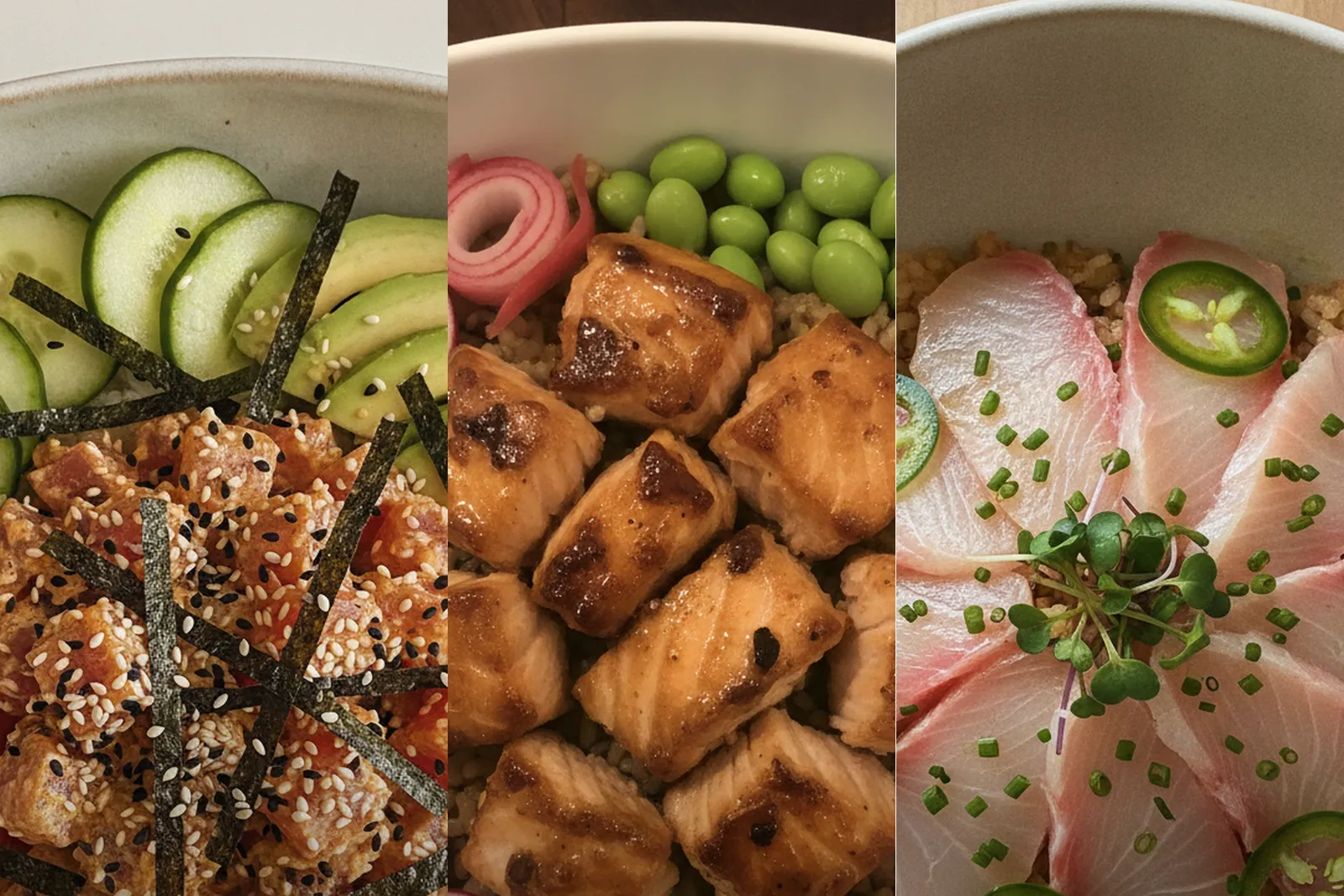
Quick answer: a sushi bowl is everything you love in a sushi roll, unrolled: seasoned rice topped with raw or cooked fish, crunchy vegetables, avocado, nori and a sauce. Below are six sushi bowl recipes (spicy tuna, teriyaki salmon, yellowtail jalapeño, crispy tofu, shrimp tempura and spicy tuna crispy rice) with calories and protein per serving, a free printable card for each, and the part most recipes skip: how to buy fish that is safe to eat raw, plus cooked swaps for every bowl.
Sushi bowls are one of the easiest takeout favorites to make at home: no bamboo mat, no rolling, and a bowl comes together in the time it takes rice to cook. Five of these bowls come from a set of high-protein sushi bowls that took off this season, and the crispy rice is the takeout favorite from our "better than takeout" collection. We rewrote every step so it is clear, worked out the nutrition from the actual ingredients, and were honest where a bowl is heavier or lighter on protein than it looks.
The one thing to get right before you start is the fish. "Sushi-grade" on a label is not a regulated term, so if you plan to eat it raw, read what to ask for at the fish counter first. If you would rather not eat raw fish at all, the teriyaki salmon, tofu and shrimp bowls are fully cooked, and the cooked swaps table covers the rest.
Pick your sushi bowl
Tap a bowl to jump to its recipe, nutrition and free recipe card.
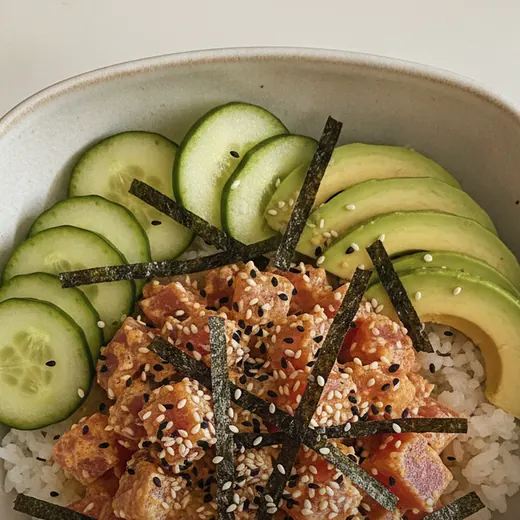 35 minSpicy Tuna 783 kcal · 50 g protein
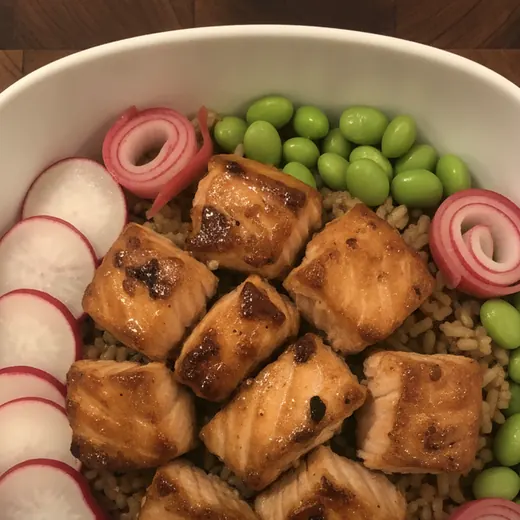 30 minSalmon and Edamame Teriyaki796 kcal · 52 g protein
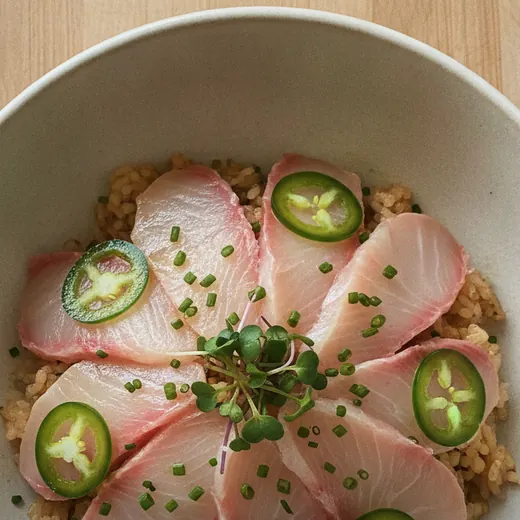 20 minYellowtail and Jalapeño481 kcal · 44 g protein
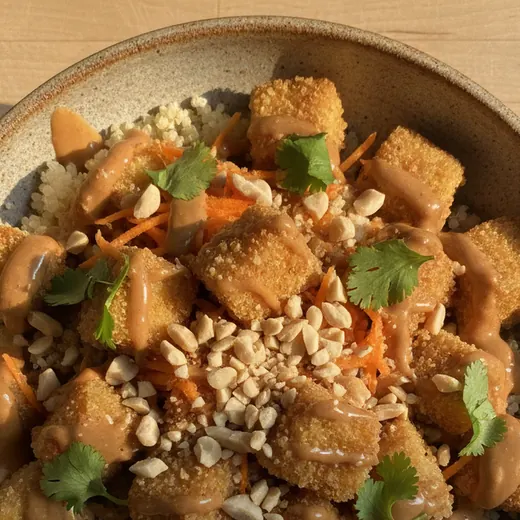 40 minCrispy Tofu and Peanut Crunch547 kcal · 33 g protein
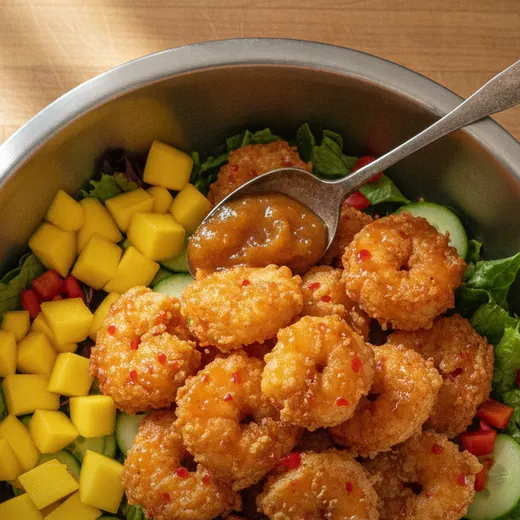 25 minShrimp Tempura and Mango Chutney602 kcal · 12 g protein
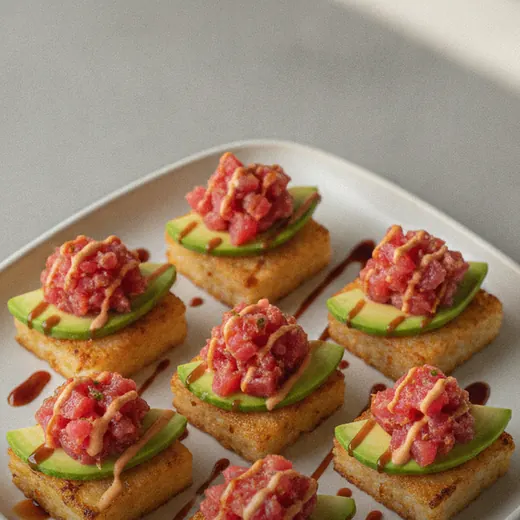 1 hr 30 minSpicy Tuna Crispy Rice471 kcal · 18 g protein
Sushi bowls at a glance
Calories and protein are per serving, calculated from the ingredients with the same food database as our recipe calorie calculator, plus USDA values for raw tuna, yellowtail and peanuts and package labels for tempura shrimp, ponzu and mango chutney. Garnishes and extra drizzles are not included.
| Recipe | Time | Calories | Protein | Raw fish? |
|---|---|---|---|---|
| Spicy Tuna and Crunchy Cucumber Sushi Bowl | 35 min | 783 | 50 g | Raw tuna |
| Salmon and Edamame Teriyaki Sushi Bowl | 30 min | 796 | 52 g | No, baked |
| Yellowtail and Jalapeño Sashimi Bowl | 20 min | 481 | 44 g | Raw yellowtail |
| Crispy Tofu and Peanut Crunch Bowl | 40 min | 547 | 33 g | No, baked |
| Shrimp Tempura and Mango Chutney Bowl | 25 min | 602 | 12 g | No, cooked |
| Spicy Tuna Crispy Rice Bites | 1 hr 30 min | 471 | 18 g | Raw tuna |
Is it safe to make a sushi bowl at home? How to buy raw fish
Yes, if you buy the right fish and keep it cold. The catch is that the words on the label do not tell you much. As America's Test Kitchen explains, there are no regulations governing the term "sushi-grade," and there is no grading system for fish like there is for beef. It simply means the seller considers the fish fit to eat raw.
What actually makes wild fish safe to eat raw is freezing, which kills parasites. The FDA Food Code, which many states adopt for restaurants and stores, calls for fish served raw to be frozen at -4°F or below for 7 days, or at -31°F or below until solid and then stored for 15 hours. A home freezer usually sits around 0°F, which is not cold enough to count on for this. Yellowfin, bluefin and bigeye tuna are exempt from the freezing rule, because those species are not considered a parasite risk; farmed salmon raised on pellet feed can also be exempt under conditions in the code.
| Fish | Raw in this guide | What to ask for | FDA mercury advice |
|---|---|---|---|
| Yellowfin (ahi) tuna | Spicy tuna bowl, crispy rice | "Is this sold for eating raw?" Deep red, firm, no fishy smell | Good Choice (1 serving a week) |
| Bigeye tuna | Avoid as a swap | Often sold as ahi too; ask which species | Choice to Avoid (highest mercury) |
| Yellowtail (hamachi) | Yellowtail bowl | Previously frozen for raw use; often sold frozen in Japanese markets | Check the FDA chart for the species; enjoy as an occasional raw treat |
| Salmon | Cooked here (teriyaki bowl) | For raw use, ask if it was frozen for parasites or is farmed for raw use | Best Choice (2 to 3 servings a week) |
| Shrimp | Cooked (tempura bowl) | Never eat raw grocery shrimp | Best Choice |
- Buy it the day you eat it, or keep it in the coldest part of the fridge and use it within 2 days, as the FDA advises for fresh seafood.
- Trust your nose and eyes: fresh fish smells clean and mild, never sour or fishy, and the flesh springs back when pressed.
- Frozen is fine, often better: fish frozen at sea or flash-frozen for raw use is what many sushi restaurants serve. Thaw it overnight in the fridge, never on the counter.
- Pregnant, cooking for small children or anyone with a weak immune system? The FDA advises avoiding raw or undercooked fish such as sushi and sashimi. Use the cooked swaps below.
Cooked swaps for every bowl
Every bowl here works with a cooked protein. Use the same amount and keep the sauces and toppings:
| Bowl | Raw protein | Cooked swap | What changes |
|---|---|---|---|
| Spicy tuna | 6 oz raw tuna | 1 can (5 oz) tuna in water, drained, or seared ahi cut into cubes | About 10 g less protein with the can; flakier texture |
| Yellowtail | 6 oz raw yellowtail | 6 oz cooked shrimp or seared salmon, thinly sliced | Keep the ponzu, lime and jalapeño; it becomes a warm bowl |
| Crispy rice | 8 oz raw tuna | 8 oz cooked salmon or canned tuna, flaked into the spicy mayo | Same crunch; easier for a party |
| Shrimp tempura | Already cooked | 6 oz plain seared shrimp | About 30 g more protein, about 200 fewer calories |
Sushi bowl vs poke bowl vs chirashi
The three get used interchangeably on menus, but they are different dishes:
- Sushi bowl: the deconstructed roll. Seasoned sushi rice, fish or another protein, roll fillings like cucumber and avocado, nori, and sauces like spicy mayo or eel sauce. Everything on this page is a sushi bowl.
- Poke bowl: Hawaiian. Raw fish is cubed and marinated in soy sauce, sesame oil and onions before it goes on the rice, so the fish itself is seasoned.
- Chirashi: Japanese "scattered sushi". Slices of several kinds of sashimi laid over sushi rice, usually with little or no sauce. The yellowtail bowl is the closest thing here.
Get the rice right
The rice is half of every bowl, and it is where homemade sushi bowls most often go wrong.
- Use short-grain sushi rice for the classic sticky, slightly chewy texture. Brown rice, quinoa and cauliflower rice all work, as the salmon, tofu and spicy tuna cards show; they just will not hold together the same way.
- Rinse it until the water runs mostly clear. This washes off surface starch, so the grains stay separate instead of turning gluey.
- Season it while warm. Rice vinegar, a little sugar and salt soak in best when the rice is hot. Fold gently with a spatula instead of stirring.
- Serve it warm or room temperature, never fridge-cold. Cold rice goes hard. Make the rice first, then prep the toppings while it cools a little.
- Watching carbs? Swap half the rice for cauliflower rice, as the spicy tuna card suggests. Check what that does to your bowl with the calorie calculator.
Keep your sushi bowl night one tap away
Save these bowls in RecipeVault to see calories and protein per serving, swap in a cooked protein with one tap and send the ingredients to your grocery list. Free on iPhone and Android.
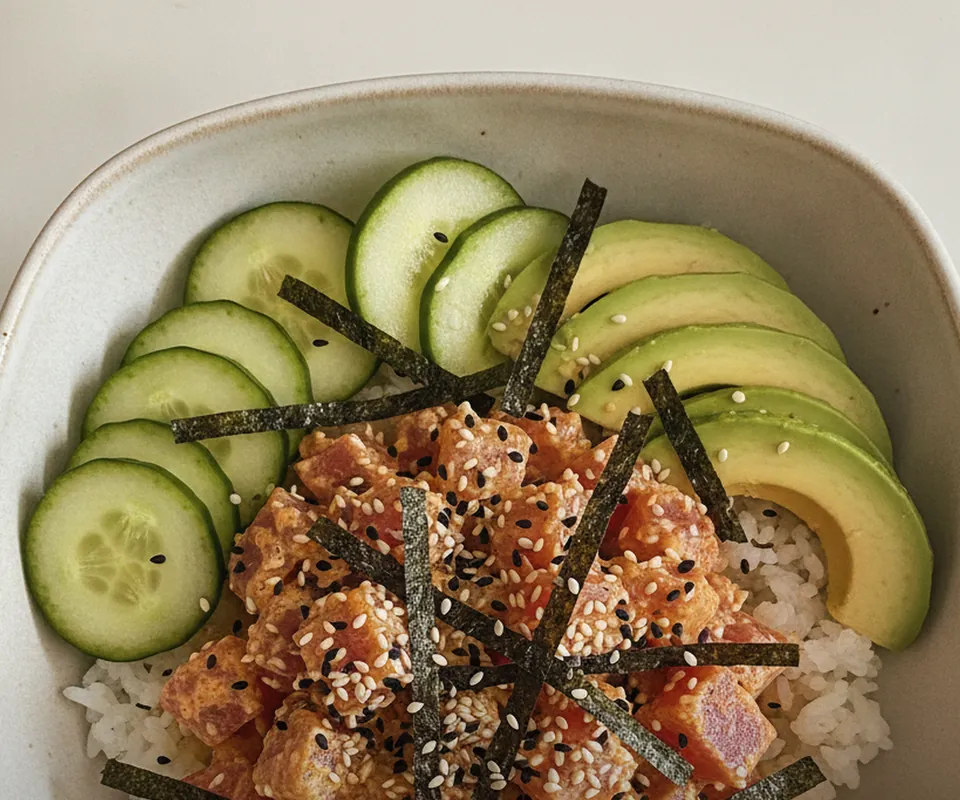
Spicy Tuna and Crunchy Cucumber Sushi Bowl
Ingredients
Instructions
- 1
Cook the sushi rice according to the package, then mix in the rice vinegar and let it cool slightly.
- 2
In a medium bowl, gently mix the diced tuna with the Kewpie mayo, sriracha, sesame oil and soy sauce.
- 3
Spoon the rice into your bowl.
- 4
Pile the spicy tuna over one side of the rice.
- 5
Arrange the cucumber and avocado alongside the tuna.
- 6
Top with nori strips, sesame seeds and scallions.
- 7
Serve right away, with extra sriracha or a pinch of red pepper flakes if you like more heat.
Why it works: dicing the tuna small and mixing it with Kewpie, which is richer than regular mayo, gives you the texture of a spicy tuna roll without rolling anything. Mix it just before serving: the soy sauce starts to firm up raw fish within minutes. Two thirds of the fat here comes from the mayo and avocado; use 1 tbsp mayo and the bowl drops by about 95 calories.
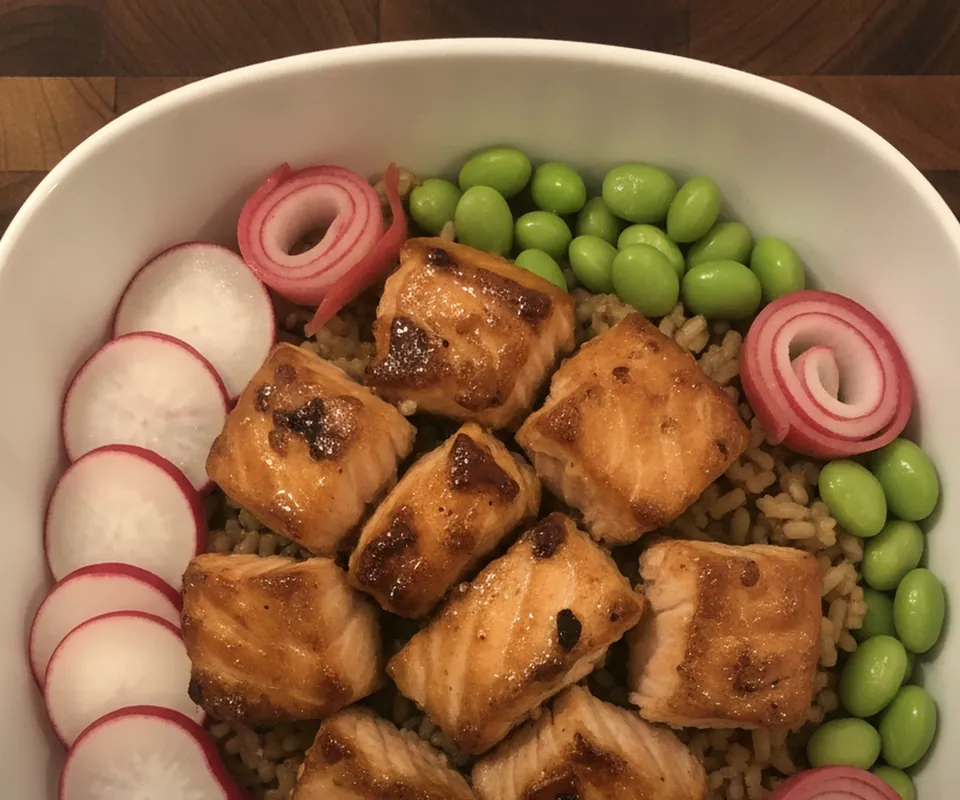
Salmon and Edamame Teriyaki Sushi Bowl
Ingredients
Instructions
- 1
Heat the oven to 400°F (200°C) and line a baking sheet with parchment.
- 2
Pat the salmon dry, brush it with the olive oil, then coat it generously with teriyaki sauce.
- 3
Bake 12 to 15 minutes, until it flakes easily with a fork. For extra glaze, brush on more teriyaki in the last 2 minutes.
- 4
While the salmon bakes, warm the brown rice and steam the edamame.
- 5
Let the salmon rest a few minutes, then flake it into chunks.
- 6
Start the bowl with brown rice and add the teriyaki salmon.
- 7
Arrange the edamame, radishes and pickled ginger around the salmon and sprinkle with sesame seeds.
- 8
Serve warm or at room temperature.
Why it works: this is the bowl to make if you are not sure about raw fish, and the one to meal prep: cooked salmon keeps 3 to 4 days in the fridge, so bake two fillets and pack two lunches. Edamame adds about 9 g of protein and the radishes and ginger bring the crunch and sharpness raw fish bowls get from their toppings.
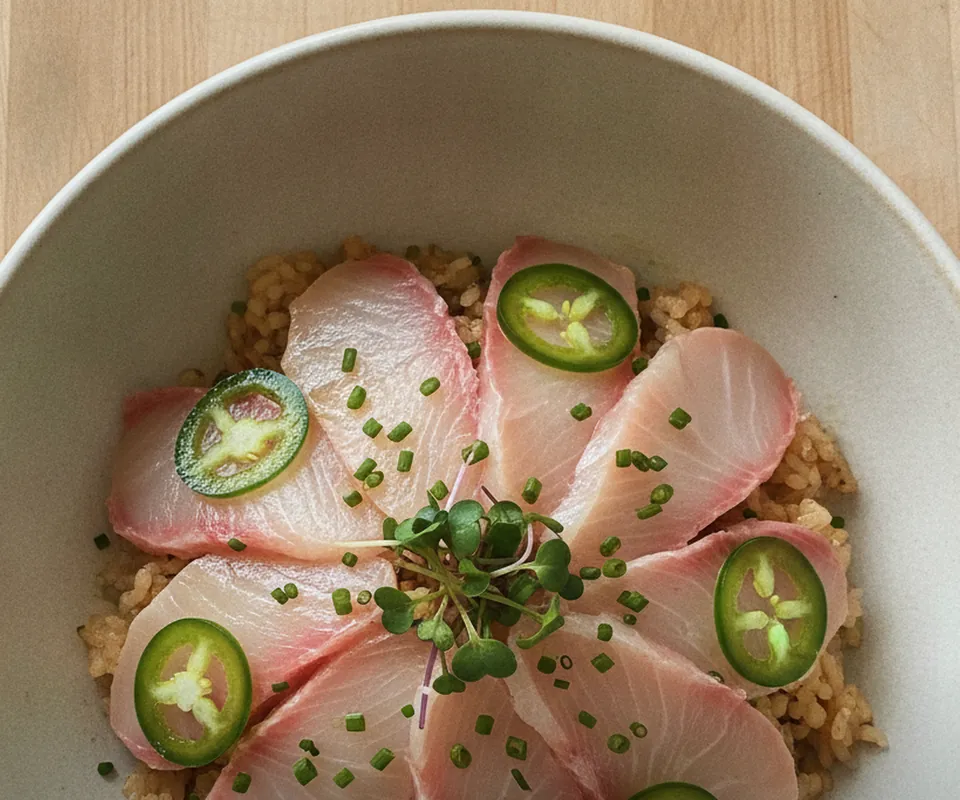
Yellowtail and Jalapeño Sashimi Bowl
Ingredients
Instructions
- 1
Prepare the seasoned sushi rice according to the package and let it cool slightly.
- 2
Thinly slice the yellowtail against the grain.
- 3
Spread the rice in the bottom of your bowl.
- 4
Lay the yellowtail slices over the rice, overlapping them slightly.
- 5
Whisk the ponzu and lime juice in a small bowl and drizzle it evenly over the fish.
- 6
Place a jalapeño ring on each slice of yellowtail.
- 7
Sprinkle with chives and a pinch of flaky salt, then garnish with microgreens or cilantro.
- 8
Serve immediately.
Why it works: this is the restaurant hamachi-jalapeño crudo turned into a bowl, and at 481 calories with 44 g of protein it is the leanest raw-fish bowl here because there is no mayo or avocado. Slice the fish with one long pull of a very sharp knife instead of sawing, and keep it cold until the moment it goes on the rice. Ponzu is salty (about 400 mg sodium per tablespoon on the Kikkoman label), so taste before adding the flaky salt.
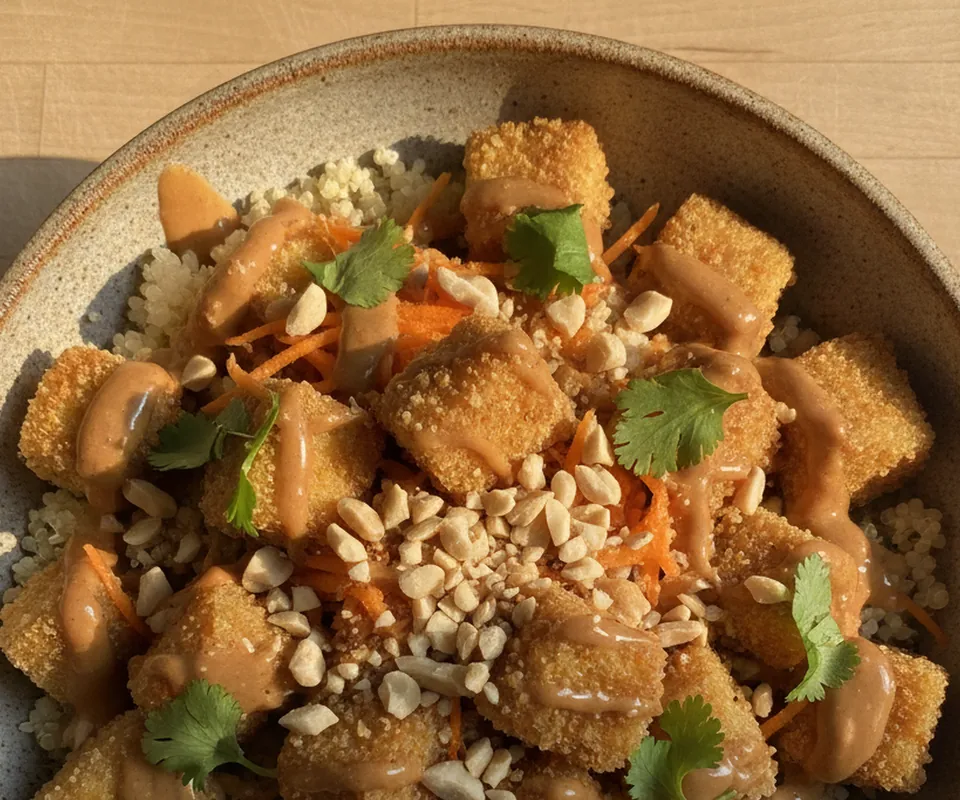
Crispy Tofu and Peanut Crunch Bowl
Ingredients
Instructions
- 1
Heat the oven to 400°F (200°C). Toss the pressed, cubed tofu with the cornstarch, soy sauce and sesame oil.
- 2
Spread the tofu in a single layer on a parchment-lined baking sheet and bake 20 to 25 minutes, flipping halfway, until golden and crisp.
- 3
While the tofu bakes, cook the quinoa according to the package.
- 4
Whisk the peanut butter, soy sauce, rice vinegar, honey or maple syrup and ginger, adding water a splash at a time until it drizzles.
- 5
Divide the quinoa between bowls and top with the crispy tofu.
- 6
Drizzle generously with the peanut dressing.
- 7
Finish with chopped peanuts, shredded carrots and cilantro, and serve warm or at room temperature.
Honest note: the card makes this as one bowl, but with 8 oz of tofu, peanut butter and a quarter cup of peanuts that bowl is about 1,095 calories, so we list it as two servings of 547 calories and 33 g of protein each. Press the tofu for at least 15 minutes under something heavy; the drier it is, the crispier the cornstarch coating gets.
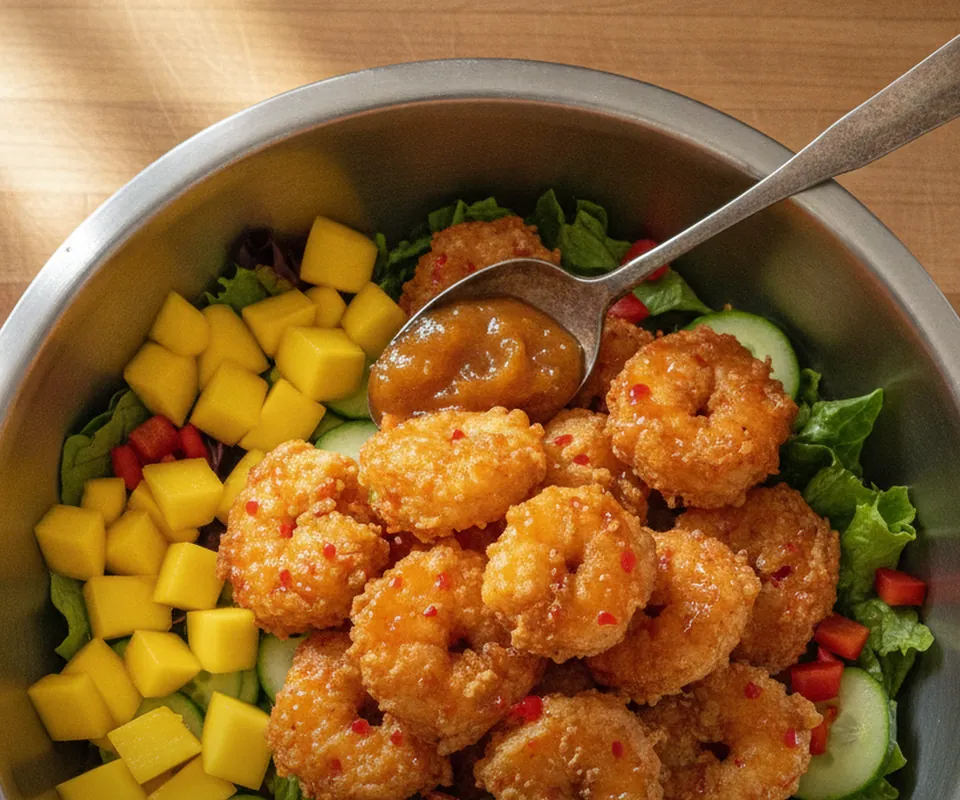
Shrimp Tempura and Mango Chutney Bowl
Ingredients
Instructions
- 1
Cook the shrimp tempura according to the package; the air fryer or oven keeps it crispiest.
- 2
While it cooks, dice the mango, cucumber and red bell pepper.
- 3
Spread the mixed greens in a large bowl.
- 4
As soon as the tempura is hot and crisp, toss it gently with the sweet chili sauce.
- 5
Set the glazed shrimp on the greens and arrange the mango, cucumber and pepper around them.
- 6
Spoon the mango chutney over the shrimp and vegetables.
- 7
Garnish with cilantro and serve immediately, while the tempura is crisp. Add a dash of hot sauce to the glaze if you want heat.
Honest note: frozen tempura shrimp are mostly batter, so this bowl has only about 12 g of protein, far less than the others. For a high-protein version, use 6 oz of plain cooked shrimp seared in a hot pan instead: it adds roughly 30 g of protein and saves about 200 calories. The sweet chili sauce, mango and chutney already give it the sweet-crunchy takeout flavor.
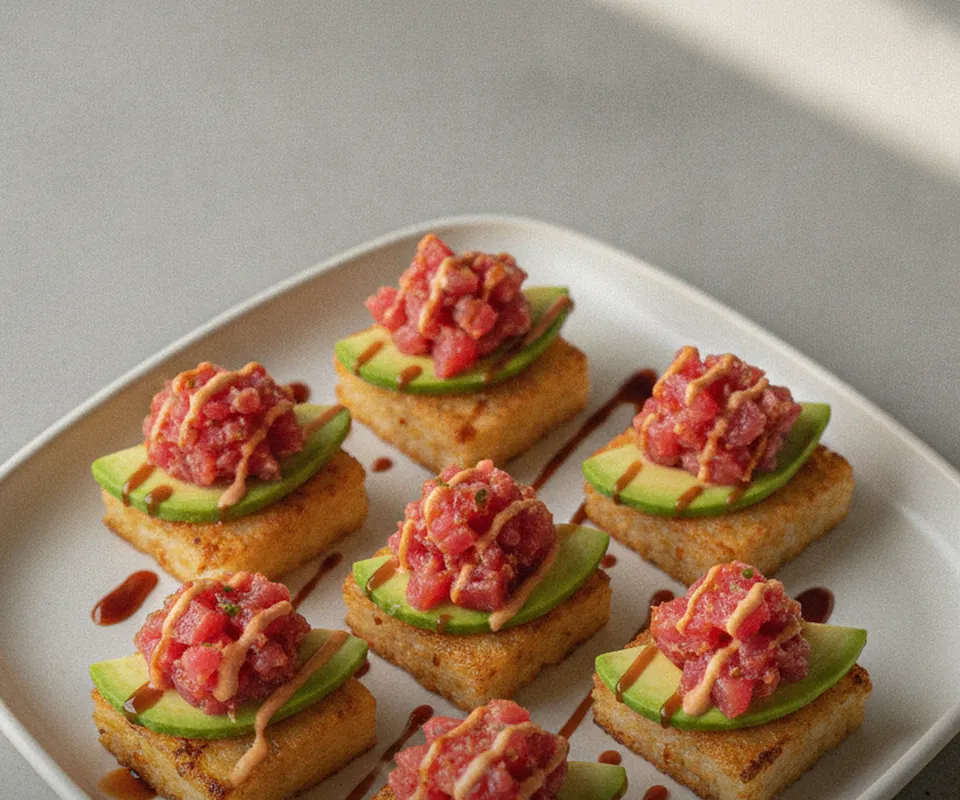
Spicy Tuna Crispy Rice Bites
Ingredients
Instructions
- 1
Whisk the rice vinegar, sugar and salt until dissolved and gently mix it into the warm cooked rice.
- 2
Press the rice evenly into an 8x8-inch dish lined with plastic wrap, packing it tightly about 1/2 to 3/4 inch thick.
- 3
Refrigerate at least 1 hour (or freeze 30 minutes) until firm.
- 4
Meanwhile, mix the tuna with the Kewpie mayo, sriracha, soy sauce, sesame oil and green onions, then refrigerate.
- 5
Turn the rice out onto a cutting board, remove the plastic and cut it into 12 to 16 rectangles with a sharp, wet knife, wiping it between cuts.
- 6
Heat the oil in a large nonstick skillet over medium-high heat and fry the rice in a single layer, in batches if needed, 3 to 5 minutes per side until deep golden and crisp.
- 7
Drain on a wire rack lined with paper towels.
- 8
Top each piece with spicy tuna, a slice of avocado and a jalapeño slice if you like.
- 9
Drizzle with sriracha mayo, sprinkle with sesame seeds and serve while the rice is still warm.
Why it works: chilling the pressed rice is the whole trick: cold, firm rice cuts cleanly and fries into a crust instead of falling apart. Our numbers count all 1/4 cup of frying oil, so the real figure is a little lower. Keep the spicy tuna in the fridge until the rice is out of the pan, so warm rice meets cold fish only on the plate.
Which sushi bowl should you make?
- You want the most protein: the spicy tuna bowl has 50 g, and the teriyaki salmon bowl 52 g. See how that fits your day with the free protein calculator.
- You are counting calories: the yellowtail bowl is 481 calories with 44 g of protein.
- You do not eat raw fish: the salmon, tofu and shrimp bowls are fully cooked.
- You are packing lunches: the salmon and tofu bowls keep in the fridge; add the toppings in the morning. More ideas in our high-protein meal prep recipes.
- You are hosting: the spicy tuna crispy rice makes 12 to 16 bites and the rice can be pressed the night before.
- You are feeding kids: the shrimp tempura bowl is sweet, crunchy and fully cooked.
Meal prep and storage
- Raw fish bowls are eat-today meals. Assemble them right before eating and do not keep leftovers with raw fish.
- Cooked bowls keep 3 to 4 days. Refrigerate cooked salmon, tofu and rice within 2 hours of cooking, in shallow covered containers, as USDA advises for leftovers.
- Pack wet and crunchy separately. Keep sauces, avocado and nori in small containers and add them when you eat, or the nori goes chewy and the cucumber watery.
- Reheat only the rice and protein. A minute in the microwave with a damp paper towel over the rice brings it back; add cold toppings after.
- Crispy rice does not keep. Press and chill the rice up to a day ahead, but fry it just before serving.
For more fridge and freezer times, see how long food lasts.
More high-protein bowls and seafood dinners
If the teriyaki bowl is your favorite, our salmon recipes have more weeknight ideas, and the shrimp recipes include quick cooked options for the tempura bowl. For lighter bowls and lunches, try the high-protein low-calorie meals and healthy lunch ideas. Saw a sushi bowl on TikTok or Instagram you want to keep? Paste the link into the free recipe importer to get the full recipe with nutrition, or make a printable card with the recipe card maker.
Frequently asked questions
What goes in a sushi bowl?
A sushi bowl starts with seasoned sushi rice (or brown rice, quinoa or greens), then a protein such as raw tuna, salmon, yellowtail, cooked shrimp or tofu, crunchy vegetables like cucumber, radish, carrot or edamame, avocado, nori strips, sesame seeds and a sauce such as spicy mayo, ponzu, teriyaki or soy sauce.
Can I use grocery store fish for a sushi bowl?
Only fish sold for eating raw. "Sushi-grade" is not a regulated term, so ask the fish counter whether the fish is meant to be eaten raw and whether it was frozen to kill parasites. Yellowfin, bluefin and bigeye tuna are exempt from the FDA Food Code freezing rule; most other wild fish should have been frozen first. Never eat raw grocery shrimp.
Are sushi bowls healthy?
They can be. Our raw-fish bowls have 44 to 50 g of protein, and the yellowtail bowl is 481 calories. The calories climb with spicy mayo, avocado, tempura and fried rice: the same spicy tuna drops by about 95 calories with 1 tbsp of mayo instead of 2. Salmon is one of the FDA's Best Choices for low mercury.
How many calories are in a sushi bowl?
Our six range from about 470 to 800 calories per serving. The yellowtail jalapeño bowl is 481, the tofu bowl 547 per half, the shrimp tempura bowl 602, and the spicy tuna and teriyaki salmon bowls about 780 to 800 because of the mayo, avocado and a full cup of rice.
What is the difference between a sushi bowl and a poke bowl?
A sushi bowl is a deconstructed sushi roll: sushi rice, fish, roll fillings and sauces. A poke bowl is Hawaiian: the raw fish is cubed and marinated in soy sauce, sesame oil and onions before it goes on the rice. Chirashi is a Japanese bowl of mixed sashimi slices over sushi rice.
Can you meal prep sushi bowls?
Yes, with cooked protein. Teriyaki salmon, baked tofu and rice keep 3 to 4 days in the fridge if you refrigerate them within 2 hours. Pack sauces, avocado and nori separately. Raw fish bowls should be assembled and eaten the same day.
Can you eat a sushi bowl when pregnant?
Not with raw fish: the FDA advises pregnant women to avoid raw or undercooked fish such as sushi and sashimi. A cooked sushi bowl is fine, for example the teriyaki salmon bowl, or any bowl here made with cooked salmon, cooked shrimp or tofu instead of raw fish.
What rice is best for sushi bowls?
Short-grain sushi rice, rinsed and seasoned with rice vinegar, sugar and salt while warm, gives the classic sticky texture. Brown rice, quinoa and cauliflower rice also work and change the nutrition: our salmon bowl uses brown rice and the tofu bowl quinoa.
Every recipe you save, ready when you are
RecipeVault saves recipes from TikTok, Instagram, YouTube, Pinterest or any website, shows nutrition per serving and can rewrite any recipe Healthier or +Protein in one tap. Free on iPhone and Android.